Hair Restoration
Hair loss changes more than your appearance. It can shift the way you carry yourself, which hairstyles feel available to you, and how recognizable you feel in the mirror. For many people, it progresses gradually enough that the full extent of the change only becomes clear in hindsight.
Board-certified plastic surgeon Dr. Glenn Vallecillos offers hair restoration in Beverly Hills for both men and women, using approaches tailored to the cause and extent of loss. Treatment begins with understanding what is driving the change, whether that means stimulating existing follicles or permanently replacing hair that is no longer growing.
Why Does Hair Loss Happen?
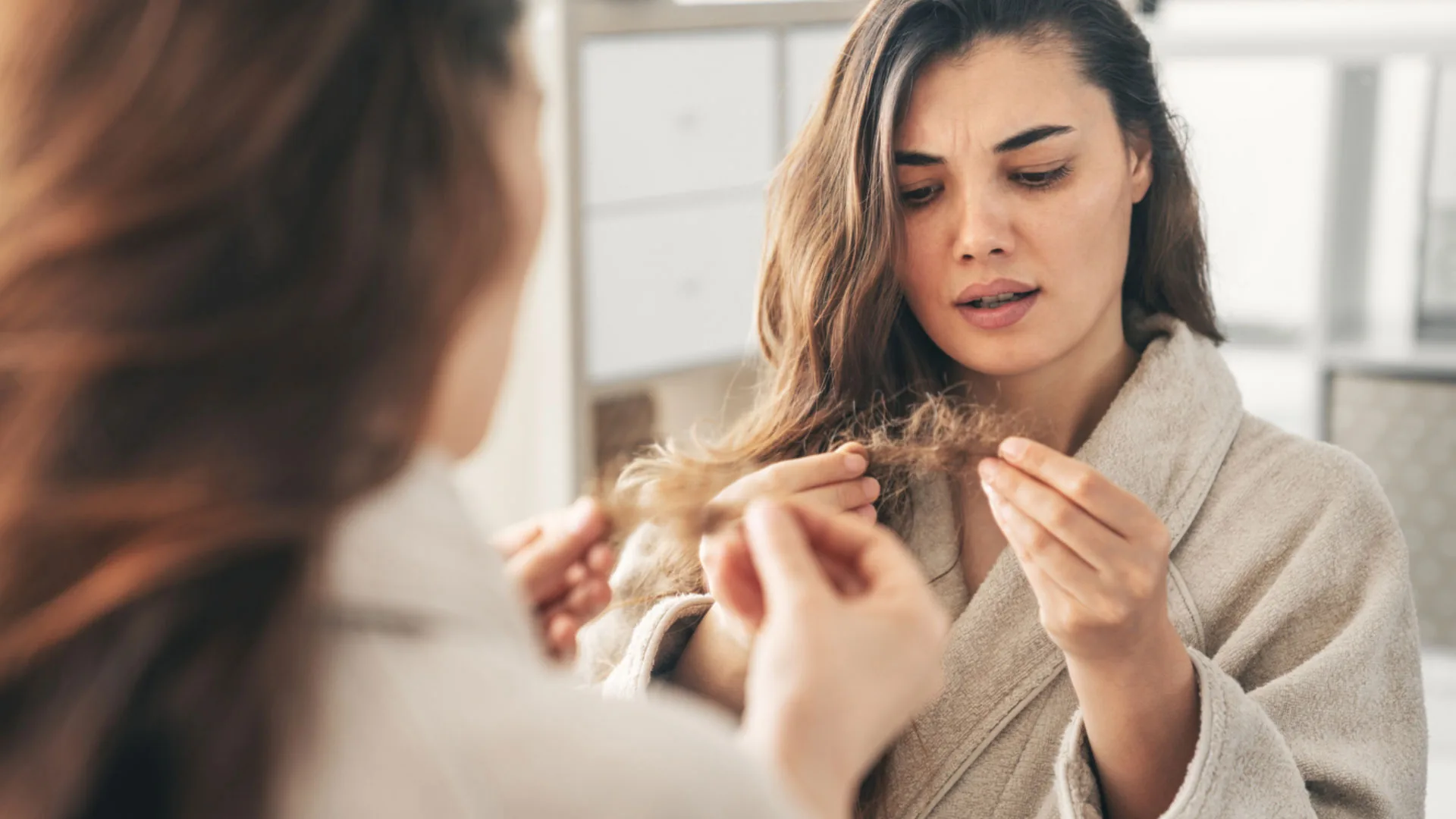
Hair loss has several causes, and understanding the underlying mechanism shapes the treatment approach.
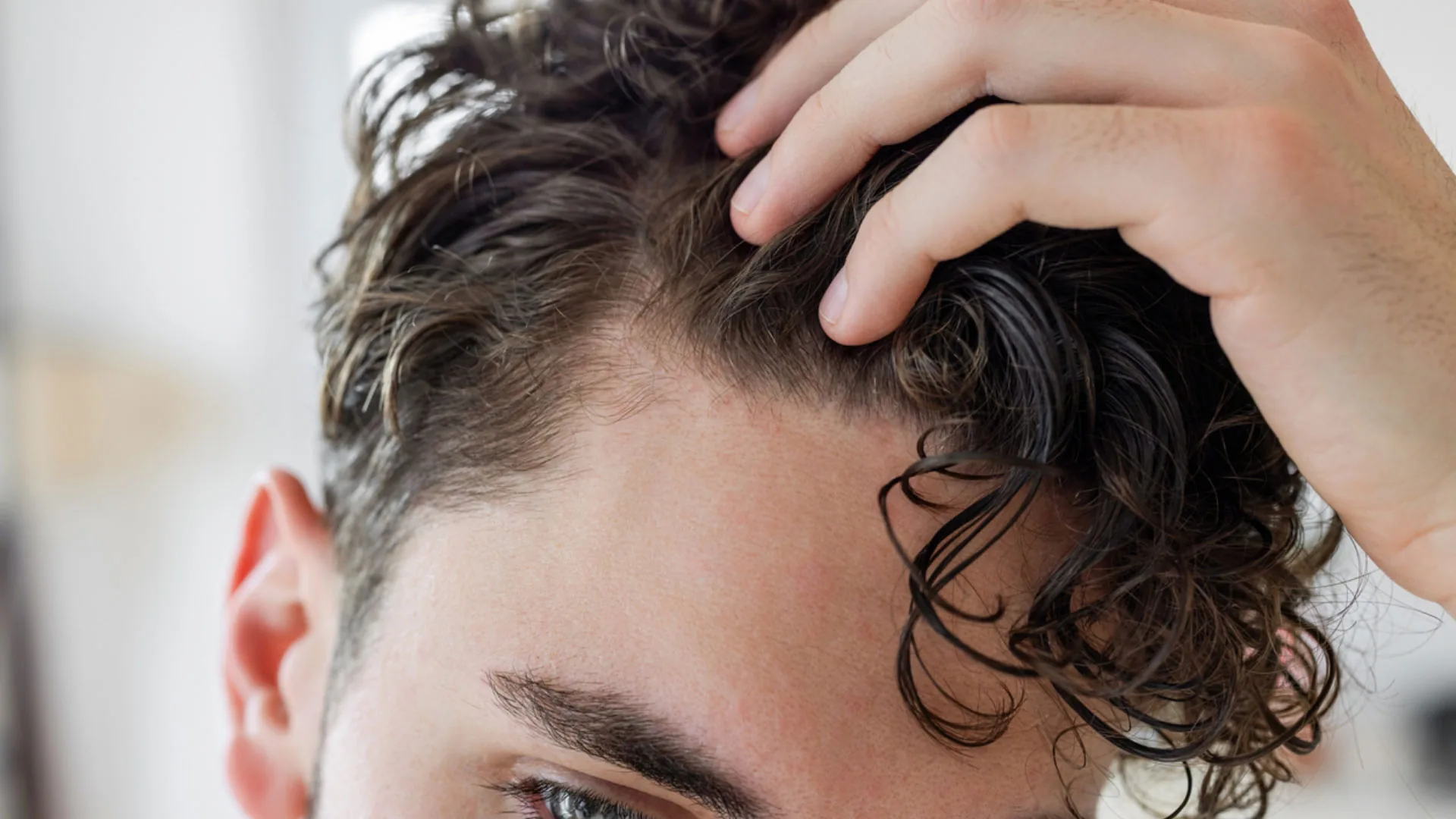
The most common form is androgenetic alopecia, a genetically driven pattern that causes follicles to shrink and eventually stop producing hair. In men, this typically presents as a receding hairline, thinning crown, or both. In women, it more often appears as diffuse thinning across the top of the scalp while the hairline remains relatively intact.
Other contributors to hair loss include:
- Hormonal shifts
- Stress
- Nutritional deficiencies
- Autoimmune conditions such as alopecia areata
- Natural changes associated with aging
In some cases, hair loss follows a specific triggering event; in others, it is a slow, continuous process.
Hair loss is not a flaw. It is a common and often hereditary change in how follicles function over time. FUE hair transplantation works by relocating follicles that retain their capacity for growth to areas where that capacity has been lost.
What Is Hair Restoration?
Hair restoration refers to any treatment approach designed to address thinning, loss or changes in hair density. The right solution depends on the cause and extent of loss, the area affected and whether the goal is to slow progression, stimulate existing follicles or permanently replace hair that is no longer growing.
Dr. Vallecillos offers two primary hair restoration treatments:
FUE Hair Transplant
Follicular unit extraction, or FUE, is the most advanced form of surgical hair restoration currently available. Rather than removing a strip of scalp to harvest follicles, FUE extracts individual follicular units one at a time using a small, precise instrument, leaving no linear scar and allowing for a significantly more comfortable recovery.
At Dr. Vallecillos's practice, FUE is performed using the NeoGraft system, an automated harvesting device that improves extraction consistency and minimizes handling time to protect graft viability. Follicles are carefully placed in thinning or absent areas at angles that replicate the natural direction of growth, ensuring the restored hair blends seamlessly with the surrounding hair. Because transplanted follicles are drawn from areas of permanent growth, they are not subject to the same loss patterns that caused the original thinning. Results are permanent.
PRP Microneedling for Hair Restoration
For patients whose loss is in earlier stages, or who want to support follicle health without surgery, microneedling with platelet-rich plasma (PRP) offers a non-surgical alternative. PRP is concentrated, platelet-rich blood plasma that contains growth factors and cytokines known to stimulate healing and tissue regeneration. In this treatment, a small blood sample is drawn, processed by centrifugation to isolate the growth factors and then applied to the scalp after microneedling.
The microneedling device creates thousands of microscopic channels in the scalp, allowing the PRP to be absorbed directly where it is needed rather than remaining on the surface. Together, the microchannels and concentrated growth factors encourage increased circulation and cellular activity at the follicle level, supporting new hair growth and improved density over time. PRP microneedling for hair restoration is effective for both men and women and can be performed as a standalone treatment or in combination with FUE.
What Can Hair Restoration Treat?
Dr. Vallecillos's hair restoration treatments address a range of hair loss presentations, including:
- Receding hairline in men
- Crown or vertex thinning
- Diffuse thinning across the scalp in women
- Patchy loss from prior scarring or trauma
- Eyebrow or beard restoration
- Early-stage loss not yet requiring transplantation
Candidacy for each approach depends on the cause and extent of loss, the quality of the donor area and the outcome you want to achieve. A thorough evaluation at consultation determines the most appropriate path.

What Is the Treatment Process Like?
Consultation and Evaluation
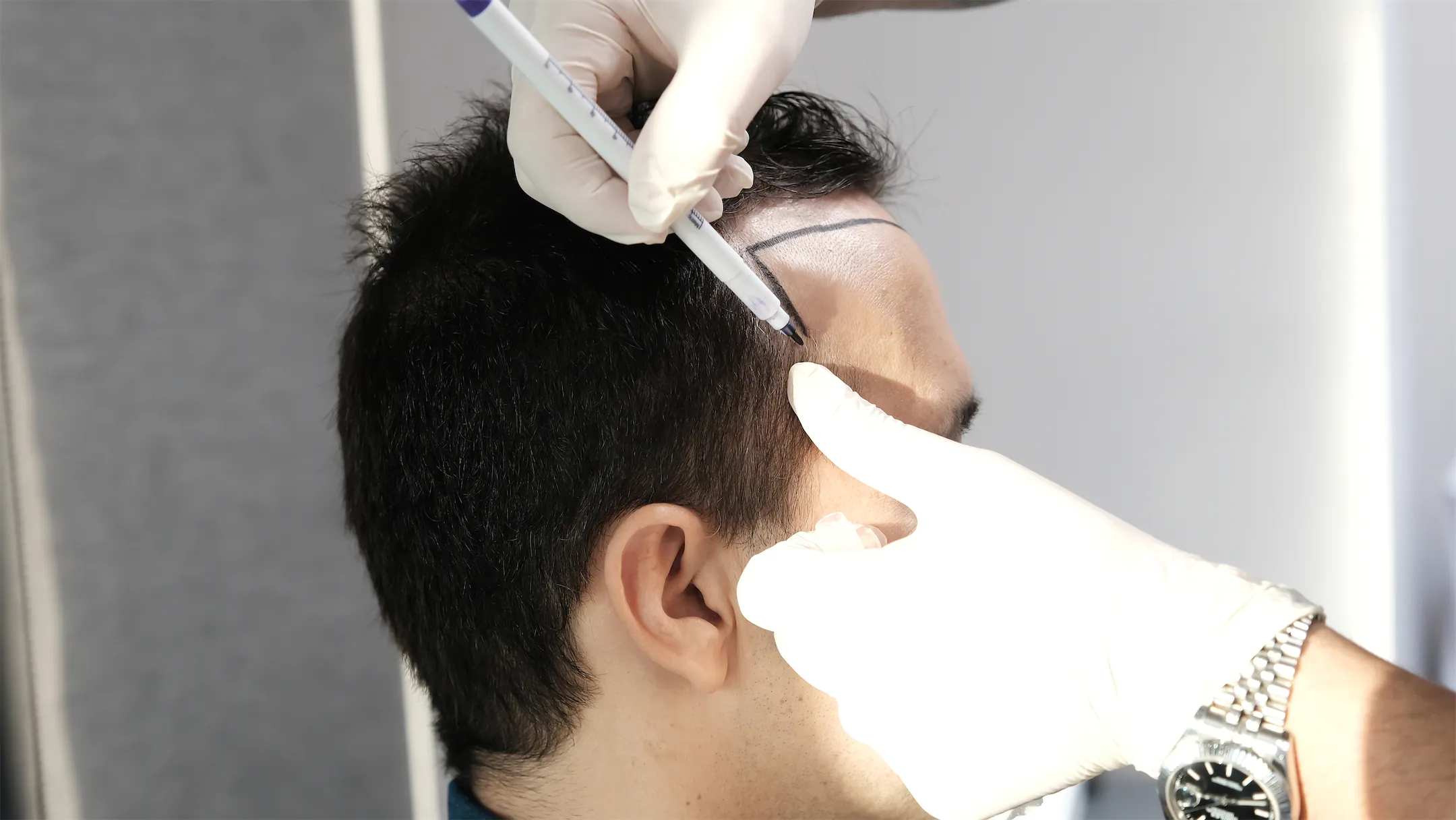
Your consultation with Dr. Vallecillos begins with a detailed assessment of your scalp, the extent and pattern of hair loss, donor area density and your goals for restoration. This evaluation determines which treatment, or combination of treatments, is best suited to your situation.
FUE Hair Transplant Procedure
FUE is performed as an outpatient procedure under local anesthesia. The steps include:
- Donor area preparation: The back or sides of the scalp are trimmed and numbed
- Follicle extraction: Individual grafts are harvested using the NeoGraft device
- Recipient site creation: Small incisions are made at precise angles to mimic natural growth direction
- Graft placement: Harvested follicles are implanted into the recipient sites
Session length varies based on the number of grafts being transplanted. Larger restorations may be staged across multiple sessions.
PRP Microneedling Procedure
PRP microneedling is performed in the office and requires no anesthesia, though a topical numbing cream is available. A small blood sample is drawn and processed to obtain concentrated PRP. A microneedling device is then guided across the scalp, creating thousands of microscopic channels, and the PRP is applied topically, where it is absorbed directly into the treatment area. Each session takes approximately 20 minutes. Most patients require more than one session, scheduled four to six weeks apart.
When Will I See Results?
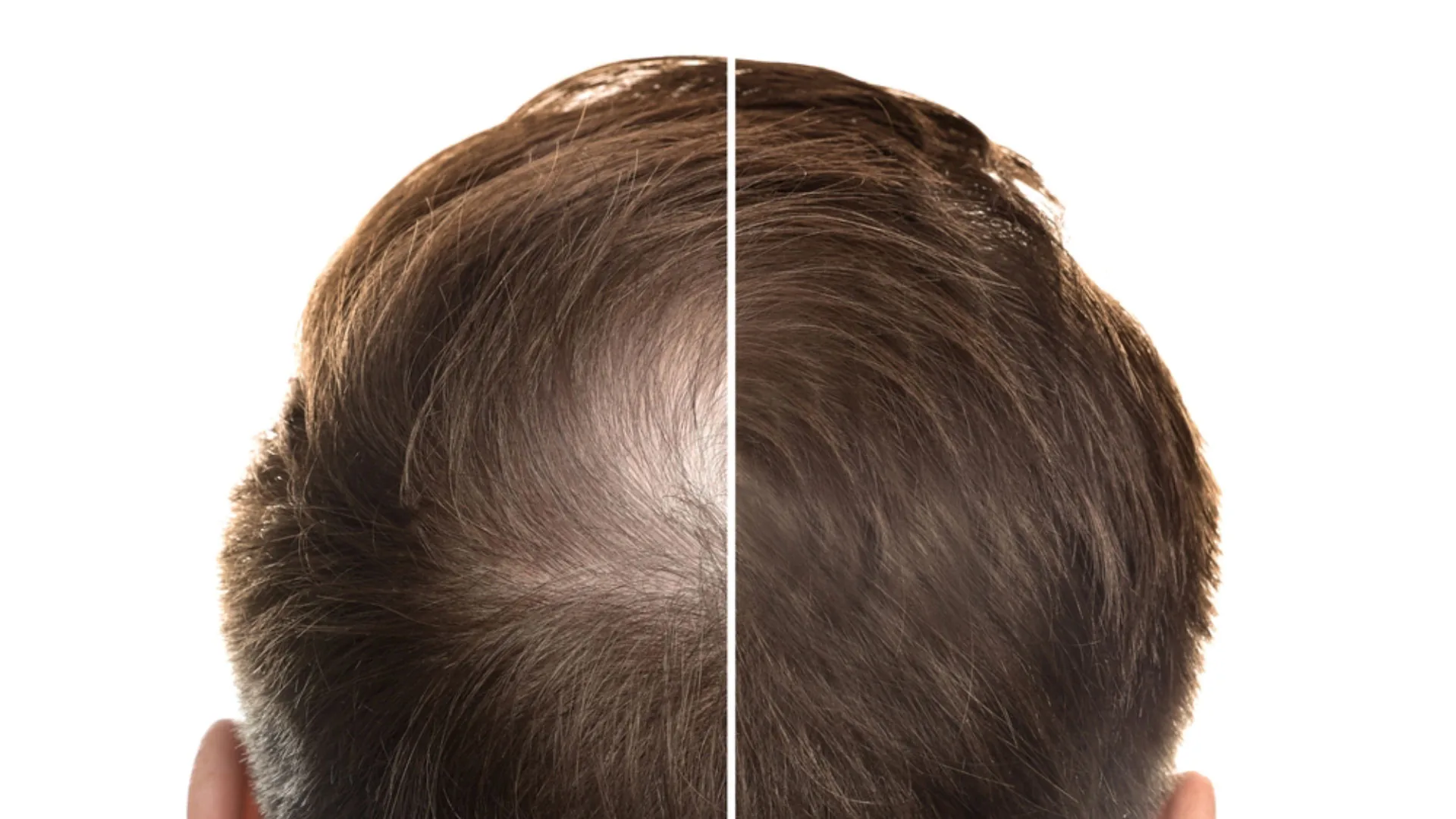
Results timelines differ between treatments. After FUE hair transplantation, most patients experience:
- Initial shedding of transplanted hairs within two to four weeks (expected and temporary)
- Early regrowth beginning around three to four months
- Meaningful density improvement at six months
- Full results within twelve to eighteen months
After PRP microneedling, improvement in hair density and scalp health develops more gradually over a series of treatments, with continued progress visible over several months.
What About Recovery?
FUE Recovery
Recovery from FUE hair transplantation is typically well-tolerated. Mild tenderness, swelling and tightness in the donor and recipient areas are normal in the first few days, and sleeping with the head elevated helps reduce swelling. Most patients return to work and light daily activities within a few days.
Strenuous activity and direct sun exposure should be avoided for approximately two weeks to protect healing grafts. Transplanted hairs shed in the first few weeks as follicles enter a resting phase before transitioning into active growth, which begins around the three to four month mark.
PRP Microneedling Recovery
There is no downtime associated with PRP microneedling. Mild redness or sensitivity at the treatment site typically resolves within a day or two, and most patients return to normal activities immediately following their session. Avoiding blood-thinning medications and supplements in the two weeks prior to treatment helps minimize the risk of bruising.
What About Risks and Side Effects?
Both treatments have well-established safety profiles when performed by an experienced provider.
FUE Recovery
Recovery from FUE hair transplantation is typically well-tolerated. Mild tenderness, swelling and tightness in the donor and recipient areas are normal in the first few days, and sleeping with the head elevated helps reduce swelling. Most patients return to work and light daily activities within a few days.
Strenuous activity and direct sun exposure should be avoided for approximately two weeks to protect healing grafts. Transplanted hairs shed in the first few weeks as follicles enter a resting phase before transitioning into active growth, which begins around the three to four month mark.
PRP Microneedling Recovery
There is no downtime associated with PRP microneedling. Mild redness or sensitivity at the treatment site typically resolves within a day or two, and most patients return to normal activities immediately following their session. Avoiding blood-thinning medications and supplements in the two weeks prior to treatment helps minimize the risk of bruising.
Frequently Asked Questions
Who is a candidate for FUE hair restoration?
Who is a candidate for FUE hair restoration?
Good candidates are men and women experiencing significant thinning or loss who have adequate donor density at the back or sides of the scalp. Candidacy also depends on the underlying cause of loss, since some conditions require stabilization before transplantation. Dr. Vallecillos evaluates each patient individually to determine the right approach.
Who is a candidate for PRP microneedling?
Who is a candidate for PRP microneedling?
PRP microneedling is well-suited for patients in earlier stages of hair loss who want to support follicle health without surgery, or for those looking to complement a FUE transplant with ongoing maintenance. It is effective for both men and women.
How many grafts will I need for FUE?
How many grafts will I need for FUE?
The number of grafts depends on the extent of thinning, the area being restored and the density you want to achieve. Some patients require a few hundred grafts for targeted work such as hairline refinement, while others pursuing more comprehensive restoration may need several thousand. Your specific plan is outlined during your consultation.
How many PRP microneedling sessions will I need?
How many PRP microneedling sessions will I need?
Most patients require a series of sessions scheduled four to six weeks apart. The total number depends on the extent of your loss and how your scalp responds to treatment. Dr. Vallecillos will outline a recommended plan during your consultation.
Can both treatments be combined?
Can both treatments be combined?
Yes. PRP microneedling can be used alongside FUE transplantation to support graft survival and overall scalp health, or as a standalone maintenance treatment between FUE sessions. Dr. Vallecillos will recommend the most effective combination based on your individual presentation.
Does FUE leave visible scarring?
Does FUE leave visible scarring?
No linear scar is created. Extraction sites heal as small, scattered marks that are not detectable once the surrounding hair returns, making FUE a preferred option for patients who wear their hair short.