
Facelift

Beverly Hills Plastic Surgeon, Dr. Vallecillos is an expert in complex facial rejuvenation which often incorporates facelift surgery in order to create the most impressive, natural results. A facelift, or rhytidectomy, is a procedure that will improve the obvious signs of aging in the face. Deep creases such as nasolabial folds and marionette lines can be significantly improved with a facelift, while concerns like tear troughs and hollow eyes are often addressed with complementary procedures like fat transfer or blepharoplasty. Additionally, the neck is addressed during facelift surgery to correct sagging neck skin, creating a more youthful neck contour.
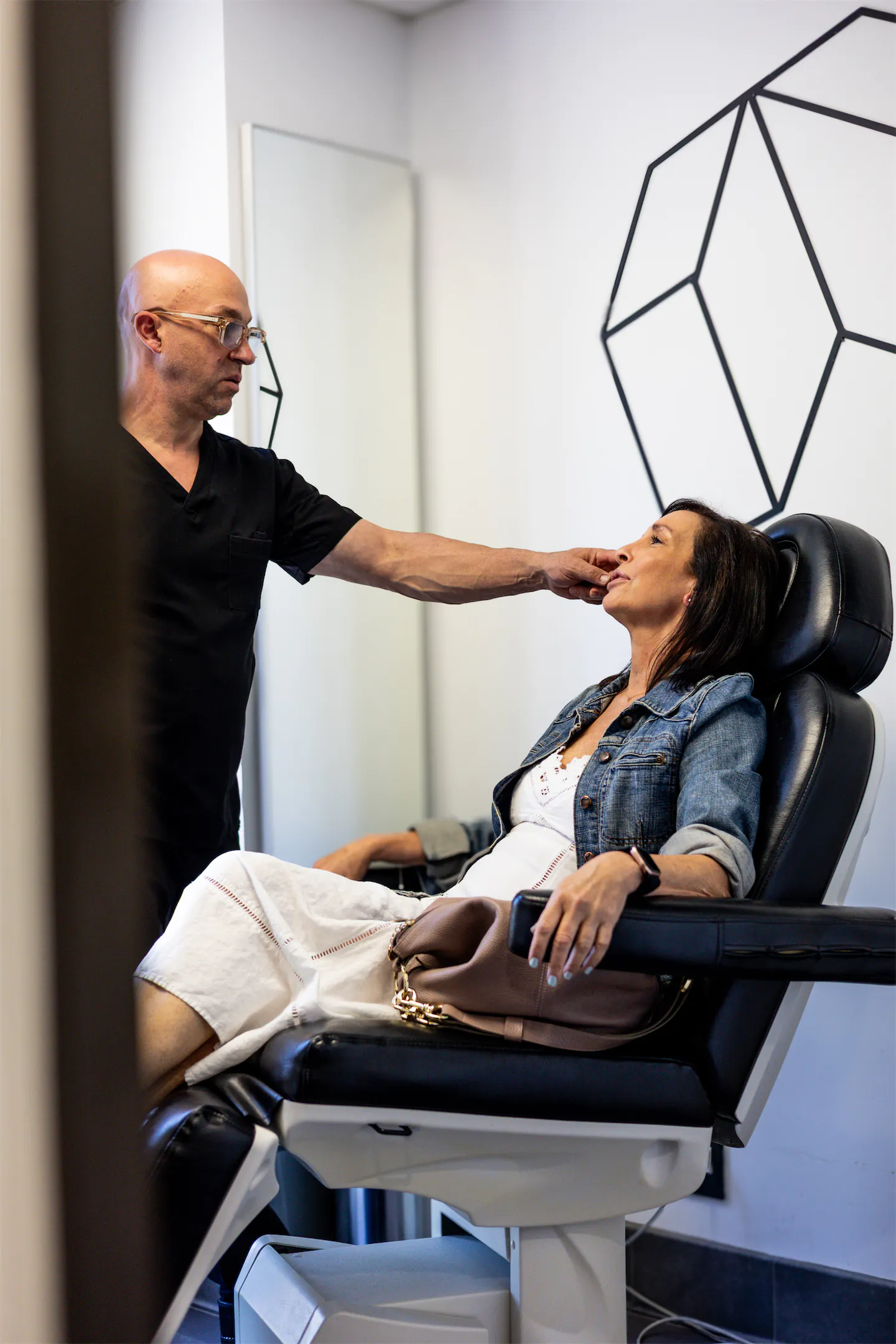
Doctor Vallecillos’s Facelift Philosophy
Undergoing a facelift is a personal decision and one that requires careful considerations of the surgeon and the desired outcome. My role is to guide you through the process of decision making, arming you with the necessary information to make the best decision possible. Not all facelifts are alike, and accordingly, understanding your goals with the available techniques will give you the best chance of being satisfied after surgery. My ideal facelift outcome is one that appears quietly natural and refreshed, never looking over-pulled or ” windblown “. A facelift, at the end of the day, should provide you with a better, more youthful version of you.
Facelift Benefits
A rhytidectomy or facelift procedure is an essential component of a multi-modal approach designed to reverse the signs of aging in a patient’s face and neck. The surgery tightens the facial skin, softens deep wrinkles and creases, reduces fatty deposits along the jawline and under the chin and firms the neck area. Additionally, facelifts are commonly performed in conjunction with micronized facial fat transfers which aim to replenish age-associated facial fat loss, most commonly around the eyes, temples, tear troughs, and nasolabial folds. When combined with complementary procedures such as Fraxel, Morpheus8, the facial skin will appear younger, firmer and smoother. Facelift patients are amongst the most satisfied of all aesthetic surgery patients, typically experiencing a boost in confidence and self-esteem as a result of such an improvement in facial appearance.
Real Facelift Results



How Are Facelift Procedures Customized?
In order to provide natural-looking, yet transformative results that blend perfectly with your unique features, Dr. Vallecillos carefully evaluates and balances a comprehensive range of factors. For example, your skin’s thickness and elasticity, fat distribution, muscle tone, facial symmetry, proportionality, and more are all unique to you and are crucial to consider when planning a facelift procedure. Experienced surgeons know how to adapt the procedure around these unique traits, which will affect the tissue depth at which the work is done, where the incisions are placed, where and how much fat grafting is required, and several other aspects of the procedure.
Finally, your goals as the patient are just as important to Dr. Vallecillos and our team as your anatomy. As your partner and advocate throughout every step of the treatment process, we are here to deliver results that perfectly align with your vision, not cookie-cutter treatment plans. In order to maximize autonomy for each patient we work with, we establish that vision with you early on in the process by asking key questions. Are you looking for a more dramatic transformation or subtle refinement? Do you want your results to be obvious to others? How much downtime and recovery are you prepared for? Wherever you land on these points, Dr. Vallecillos will tailor the procedure to deliver the experience and the results you’re looking for.
Which One Is Right for You?
No two faces experience aging the same way, which is exactly why a single facelift technique doesn't work for every patient. Dr. Vallecillos is trained in the full spectrum of facelift approaches, from minimally invasive options for early-stage aging to more comprehensive deep-plane procedures for patients with more advanced skin laxity and other concerns. During your consultation, he'll assess your anatomy, skin quality and goals to determine the most appropriate strategy or combination of strategies for you.
Facelift Comparison Table
Use this table as a quick reference when weighing your options. As always, the right technique comes down to your individual anatomy and goals, which Dr. Vallecillos will assess thoroughly at your consultation.
Facelift Type | What It Addresses | Technique / Incisions | Ideal Candidates | Invasiveness | Longevity | Pros | Cons |
Mini Facelift | Mild jowling, early skin laxity | Short incisions around ears; limited SMAS tightening | 40s–50s, mild aging | 2 out of 5 invasiveness | 3–5 yrs | Quick recovery, subtle refresh | Less improvement; doesn't address neck |
Endoscopic (Limited Incision) | Early midface descent, forehead | Camera-guided small incisions | Younger patients, early laxity | 2 out of 5 invasiveness | 3–5 yrs | Minimal scarring, faster recovery | Limited correction for significant laxity |
SMAS Plication | Moderate jowling, early midface descent | SMAS tightened with sutures (no excision) | Mild–moderate aging | 3 out of 5 invasiveness | 5–7 yrs | Natural results, lower risk | Less powerful than deep plane techniques |
SMASectomy | Moderate sagging, lower-face support | Strip of SMAS removed and tightened | Patients needing firmer lower face | 3 out of 5 invasiveness | 7–10 yrs | Stronger lift than plication | More swelling than plication |
Deep Plane | Deep folds, heavy midface, jowls, neck | SMAS + skin lifted together under ligaments | Moderate–significant aging | 4 out of 5 invasiveness | 10–15 yrs | Most natural, longest-lasting | More complex; longer recovery |
Extended Deep Plane | Severe sagging, deep nasolabial folds | Deep plane extended into midface + neck | Advanced aging, heavy volume descent | 5 out of 5 invasiveness | 10–15 yrs | Maximal lift and natural results | Longest recovery; most invasive |
High-SMAS | Cheek descent, midface aging | SMAS release extended high into cheek | Patients with midface volume drop | 4 out of 5 invasiveness | 8–12 yrs | Excellent midface elevation | More swelling; technically advanced |
Midface Lift | Cheek sagging, lower eyelid aging | Incisions in lower lid or temples | Younger patients, midface laxity | 3 out of 5 invasiveness | 5–8 yrs | Improves under-eye and cheek harmony | Doesn't treat jawline or neck |
Lower Facelift | Jowls, marionette lines | Ear incisions, lower face focus | Isolated lower-face aging | 3 out of 5 invasiveness | 5–8 yrs | Shorter downtime; targeted correction | No midface or upper-face correction |
Ponytail Facelift | Mild sagging, early aging | Endoscopic, upward vector lift | Younger patients wanting subtle lift | 2 out of 5 invasiveness | 3–5 yrs | Minimal scarring | Variable results; not for significant aging |
Liquid Facelift | Volume loss, mild sagging | Fillers + Botox | Mild aging, non-surgical preference | 1 out of 5 invasiveness | 1–2 yrs | No downtime; reversible | Cannot treat true laxity or jowling |

Who Is a Candidate for Facelift?
Though facelifts address a range of highly common aging-related issues affecting the mid-face, lower face, and neck, this doesn’t mean every patient presenting with one or more of these aesthetic concerns will be an ideal candidate. Facelifts treat moderate to advanced sagging skin, creases around the nose and mouth, volume loss, skin laxity, and more, but health status, skin type, and patient expectations must all be assessed and managed before moving forward with a treatment plan.
For example, patients with active skin infections, certain autoimmune disorders, poorly controlled chronic disease, or a history of low tolerance to anesthesia may not be well-suited for a facelift. Skin type also plays a pivotal role in how incisions heal, including the initial appearance and eventual fading of scars. Both skin elasticity and bone structure can affect your eligibility for this treatment and the approach that Dr. Vallesillos takes to your tailored treatment.
Finally, establishing realistic expectations of what rhytidectomy can and can’t do is a vital part of the treatment process. In a one-on-one consultation, Dr. Vallecillos will provide both the information and the assurance you need to feel completely confident about your upcoming procedure.
“Dr. Vallecillos provided the assurance I needed to feel at ease. His pleasant demeanor and sense of humor, as well as his obvious professional passion and superior surgical acumen, made my overall experience one that exceeded all expectations.”
— Joyce M.
How Is the Facelift Combined With Other Procedures?
While the facelift is one of the most comprehensive facial rejuvenation procedures available, it doesn’t address every single concern. Complementary surgical and nonsurgical procedures like Fraxel Laser, Morpheus8 RF Microneedling, Blepharoplasty, and several others can significantly enhance and broaden your results when carefully integrated into a customized anti-aging treatment plan.
Fraxel Laser and Facelift
The Fraxel Laser Treatment platform uses fractional laser to gently, yet efficiently treat a variety of aesthetic concerns affecting the superficial and mid-dermal skin layers, including sun spots, age spots, fine lines, and more. For people who experience these issues alongside skin laxity and volume loss, pairing Fraxel with a facelift allows for a powerfully transformative approach. The facelift tightens and repositions underlying tissues, while the laser improves the quality and appearance of the superficial skin layers through collagen stimulation and other healing mechanisms.
Ellacor and Facelift
A newer addition to our complementary treatment menu, Ellacor uses patented Micro-Coring™ technology to physically remove thousands of microscopic cores of dermal and epidermal tissue, stimulating the skin to close those micro-gaps and tighten as it heals. The result is a measurable reduction in skin laxity, wrinkles and marionette lines, all without thermal injury, scarring and general anesthesia. For facelift patients, Ellacor is well-suited as a maintenance or enhancement tool because it addresses superficial skin quality, which complements surgical lifting.
Morpheus8 RF Microneedling and Facelift
Morpheus8 combines microneedling with radiofrequency energy to stimulate collagen production, resulting in tighter skin, reduced scarring and smoother texture. Morpheus8 tightens and firms up skin at the dermal level, smoothing out etched-in lines and other superficial concerns, while the facelift typically addresses deeper tissues. Morpheus8 can also reach some areas that the facelift doesn’t treat as effectively, such as the under-eye regions.
Blepharoplasty and Facelift
The technical term for eyelid surgery, blepharoplasty can significantly enhance the ability of a facelift to produce a more refreshed, alert appearance. Upper blepharoplasty targets sagging skin and drooping eyelids, while lower blepharoplasty dramatically reduces the appearance of under-eye bags. The more pronounced these issues are, the more patients stand to benefit from combining blepharoplasty and facelift, as facelift alone may leave an unwanted contrast between the eyes and the treated areas.
Facelift and Other Procedures
Finally, facelifts can also be paired with neck liposuction, submental contouring (double chin liposuction), brow lift, and a number of other treatments to provide more tailored, comprehensive benefits. Whatever the plan entails, pairing treatments requires both the patient and the provider to revisit several key considerations, including timing, cost, follow-up scheduling, and downtime. If you’re considering a combined approach, Dr. Vallecillos will work with you to best accommodate all of your needs while delivering powerful, yet effortlessly natural results.
Facelift Recovery, Downtime, and Aftercare
It takes time for the results of facelift surgery to be fully visible. Recovery happens gradually, in several phases, with symptoms easing steadily over time. While every patient is slightly different in how their body responds to the procedure, knowing what to expect throughout each step of the recovery process provides a crucial confidence boost while empowering you with what you need to aid in your own recovery.
The Typical Facelift Recovery Process
In the 1-3 days immediately following your procedure, you will likely have a bandage and, possibly, a small surgical drain to prevent fluid accumulation. Typically, post-operative swelling peaks within the first two weeks and gradually subsides from there. Mild to moderate discomfort, tenderness, and tightness are also expected during this acute 2-week phase. Prescription or over-the-counter pain medication should be sufficient to keep any discomfort under control.
Towards the end of the second week, sutures and staples will likely be removed, and you may be encouraged to engage in very light activities, including walking. As swelling continues to resolve throughout weeks three and four, your results will begin to take shape. Any sensations of tightness you had will continue to fade, and many patients return to work or other public-facing activities during this middle phase.
As you progress through and beyond the second month of recovery, your results will continue to improve, and the swelling will completely resolve. By month six, your results should be finalized, and your rejuvenated contours settled. Incision lines may continue to fade for several months afterwards.
Facelift Aftercare
Always defer to your provider when establishing and updating your aftercare routine, as Dr. Vallecillos will provide you with personalized instructions to ensure you are comfortable and confidently informed about your own treatment and recovery, just like Isabel.
“I was afraid of the surgery and pain, but Dr. V assured me that he would take care of me. I followed the before and after care instructions and the recovery time was quick: within two weeks I was back to work.”
— Isabel Rodriguez
To provide a general blueprint for context, the typical facelift aftercare routine includes the following steps:
- Sleep positioning - Most patients are advised to sleep with their head elevated for at least one to two weeks after the procedure.
- Wound care and hygiene - This includes guidance on keeping incisions clean and dry, avoiding submerging your face in water, and only using approved topical products until cleared.
- Activity modification - Avoiding bending, heavy lifting, and high-intensity exercise for at least 3-4 weeks after your procedure is vital for safeguarding your results.
Additional aftercare practices commonly recommended to facelift patients include sun protection, scar management, and guidance on follow-up or complementary treatments.
Frequently Asked Questions
What is facelift surgery?
What is facelift surgery?
Facelifts are cosmetic procedures that tighten, lift, and firm the skin of the face and neck to improve the visible appearance of aging. Also referred to as a rhytidectomy, surgical facelifts utilize small, often hidden incisions to tighten sagging skin and reduce the appearance of deep lines and wrinkles. There are several approaches to facelift surgery, varying primarily by the depth of tissue that they treat.
What type of anesthesia is used for facelift surgery?
What type of anesthesia is used for facelift surgery?
Surgical facelift procedures require general anesthesia to provide a pain-free, stress-free experience. Full sedation under general anesthesia ensures the patient maintains stable vital signs and endures as little stress as possible during the procedure.
What is mini facelift surgery?
What is mini facelift surgery?
Mini facelifts address signs of aging on the upper neck while reducing the appearance of jowls on the lower face. Full facelifts target the midface region and the entire neck area. Mini facelifts have a smaller price tag but still leave you with dramatic and lasting results.
Is having a facelift worth it?
Is having a facelift worth it?
Facelifts are one of the most common anti-aging surgical procedures and consistently rank among the most satisfying aesthetic procedures for patients. Facelifts provide visually dramatic, long-lasting anti-aging results with little post-procedure maintenance or downtime.
How long do the results of facelift surgery last?
How long do the results of facelift surgery last?
Patients report their anti-aging results lasting for ten years or more. It’s important to note that even after a facelift, your skin will continue to age, losing elasticity and volume. Your surgeon can discuss “touch-up” procedure options to help maintain the same youthful look as the years pass.
What’s the best age for a facelift?
What’s the best age for a facelift?
By the time we reach our 40s, the skin has begun to lose its volume and elasticity leading to the appearance of lines, wrinkles, jowls, and sagging skin. People between the ages of 40 and 60 will likely achieve the highest quality, longest-lasting results.
Do facelifts work for all skin types?
Do facelifts work for all skin types?
Yes, facelifts are successfully performed on patients of all skin types and tones. However, the skin’s pigmentation, elasticity, thickness, and other attributes can all affect both the results and the approach that your treatment provider takes to the procedure. For example, skin with higher elasticity tends to yield better facelift results, and skin pigmentation influences scarring.
How much does facelift surgery cost?
How much does facelift surgery cost?
The average surgical facelift cost will vary depending on your local area, your surgeon’s expertise, the type of facelift, and more. In our region, facelifts cost between $35,000 and $150,000, depending on the additional procedures you incorporate into your plan.
Are facelifts covered by insurance?
Are facelifts covered by insurance?
Because facelifts are usually classified as elective cosmetic procedures, they are not typically covered by most insurance policies. However, it is still possible for a facelift to be deemed medically necessary in some situations, which increases the patient’s chances of receiving coverage. For example, if a facelift is performed for reconstructive reasons on a patient with a traumatic injury or to improve visual impairment, it may be considered medically necessary.
How dangerous is facelift surgery?
How dangerous is facelift surgery?
For healthy adults, facelift surgery performed by a board-certified plastic surgeon is considered safe, though all surgery carries some risk. All surgical procedures have some risks associated with general anesthesia. Rarely other risks can include allergic reactions, scarring, bleeding, and nerve damage. Dr. Vallecillos takes every possible precaution to mitigate these risks as much as possible. Discuss any health complications with your surgeon at your consultation.
How long does it take to recover from a facelift?
How long does it take to recover from a facelift?
Many surgical facelift patients feel ready to return to work after only 1-2 weeks, with complete healing after 4-6 weeks. To ensure the best results possible, avoid strenuous activities during the first six weeks of recovery or until your surgeon has determined it’s safe.
Does a facelift include the neck and eyes?
Does a facelift include the neck and eyes?
Traditional facelift procedures focus on the neck and lower face. Many patients who want to correct areas around the eyes can include other surgical anti-aging procedures while they undergo their facelift. This strategy allows for one procedure, reduced healing time, and lower costs.