
Tummy Tuck
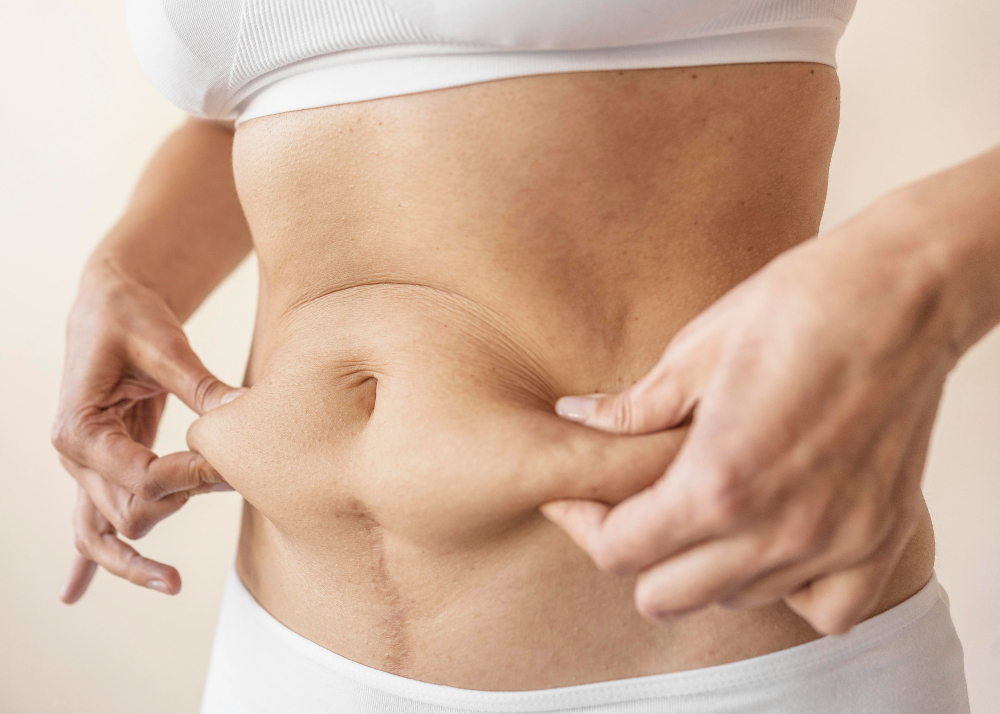
A tummy tuck, or abdominoplasty, is a surgical procedure that removes excess fat and skin from the stomach area. It will also tighten weakened and loose abdominal muscles to give the stomach a flatter, firmer appearance. The procedure may be performed on its own, or in combination with other procedures such as a mommy makeover.
During the procedure, an incision is made in the lower abdominal region, allowing the surgeon to access and repair the muscles that comprise the abdominal wall and remove excess fat, tissue, and skin. Depending on the individual patient, a second, higher incision may be made near the navel to excise fat and skin in the upper portion of the stomach.
Liposuction may be utilized to remove excess fat during an abdominoplasty.
Procedure Walk-Through
After the incisions are made, Dr. Vallecillos will bring loose or weakened abdominal muscles closer together and suture them to create a newly firm abdominal wall.
Once the extra tissues have been removed, the skin is re-draped over the abdomen, extra skin is removed, and the incisions are closed.
The final result of a tummy tuck should be a flatter, firmer stomach and an abdomen that is more proportional to the rest of the body.
Preparation
You should be close to your ideal weight before undergoing a tummy tuck, as post-operative weight fluctuation can undermine results. Thus, it is important to maintain a healthy lifestyle, including balanced diet and exercise, up until surgery, and thereafter. Any drugs, such as aspirin and anti-inflammatory medications, herbal supplements, or vitamins that act as blood thinners should not be taken for at least two weeks before surgery. There should be no smoking for at least two weeks before a tummy tuck procedure. If you are over the age of 45, you will need to acquire medical clearance from an independent physician before undergoing surgery.
Anesthesia
A tummy tuck may be performed under three different types of anesthesia: general anesthesia, local anesthesia with intravenous sedation, or epidural anesthesia. Most patients receive general anesthesia.
At the start of the procedure
Dr. Vallecillos will make an incision in the lower abdomen, just above the pubic region. The size of the incision will depend on the severity of the treatment needed, and generally will extend up and out towards the hips, following the natural contour of the body. An additional incision may be made around the navel, to address the upper abdomen.
Why Choose Dr. Vallecillos for a Tummy Tuck?
A tummy tuck repairs separated abdominal muscles and removes loose skin. The finer details determine whether your midsection looks sculpted or simply flatter. Dr. Vallecillos can incorporate liposuction of the flanks and waist to create a natural transition from abdomen to hips.
As a Fellow of the American College of Surgeons with fellowship training in plastic and reconstructive surgery, he positions your incision low enough to conceal beneath most swimwear and plans your navel placement with care. Schedule a consultation to discuss the contour you want to achieve.


Frequently Asked Questions
Who is a candidate for a tummy tuck?
Who is a candidate for a tummy tuck?
You should consider an abdominoplasty if you are a healthy adult at a stable weight, with no plans for future pregnancies. You should not undergo a tummy tuck as a substitute for weight loss or as a method for removing stretch marks.
Are there risks or side effects with a tummy tuck?
Are there risks or side effects with a tummy tuck?
You should expect some pain, swelling, and bruising during the first few weeks after surgery. There will also be some visible scarring at the points of incision. Though rare, risks can include bleeding, infection, fluid accumulation, skin loss, and nerve damage.
How long do the results last?
How long do the results last?
With regular exercise, a well-balanced diet, and no future pregnancies, your new flatter, firmer abdomen can last a lifetime.