
Male Breast Reduction
Few things make a man more self-conscious than a chest that doesn’t match the rest of his body. Whether it’s skipping the pool, layering shirts in the summer or avoiding photos altogether, gynecomastia has a way of quietly shaping everyday decisions. Beverly Hills plastic surgeon Dr. Glenn Vallecillos performs gynecomastia surgery, also called male breast reduction, to remove excess glandular tissue and fat and create a flatter, firmer and more masculine chest contour. As a pioneer in VASER-assisted high-definition body contouring, Dr. Vallecillos brings a sculptor’s precision to a procedure where subtle details make all the difference.

What Is Gynecomastia?
Gynecomastia is the enlargement of breast tissue in men, caused by an overgrowth of glandular tissue, excess fat or a combination of the two. It can affect one or both sides of the chest and is far more common than most people realize, appearing in newborns, teenage boys going through puberty and adult men of all ages.
Not every full chest is true gynecomastia. When the enlargement comes mostly from fat rather than gland, it’s known as pseudogynecomastia. The distinction matters because it determines which surgical technique will work best. True gynecomastia often feels like a firm, rubbery disc beneath the nipple, while fatty enlargement tends to feel softer and more evenly distributed. During your consultation, Dr. Vallecillos will examine your chest to identify exactly what’s causing the fullness.
What Causes Gynecomastia?
Most cases trace back to an imbalance between testosterone and estrogen. During puberty, hormone levels shift dramatically, and many boys develop temporary breast tissue that resolves on its own within a year or two. When that tissue lingers into adulthood, it usually needs to be removed surgically.
In adult men, several other factors can tip the hormonal balance. Excess body weight plays a significant role because fat tissue converts testosterone into estrogen. Anabolic steroids, marijuana, certain prostate cancer treatments and some other prescription medications are also well-known triggers. Less commonly, gynecomastia develops as a secondary effect of liver disease, kidney failure, thyroid problems or testicular tumors. Genetics may also contribute, which helps explain why some men develop gynecomastia without any obvious hormonal cause.

Signs and Symptoms of Gynecomastia
The most noticeable sign is a fuller, rounder or puffier chest, often concentrated around and beneath the nipple. Some men also notice that the area feels tender or sore, particularly when the tissue is growing. Puffy or enlarged areolas that look more prominent under fitted clothing are another common complaint.
Breast enlargement in men occasionally signals something other than gynecomastia, so any new change deserves a medical evaluation. A hard, fixed lump on one side, skin dimpling, nipple discharge or a nipple that turns inward can be signs of male breast cancer and should be checked by a physician promptly. A breast that becomes red, hot and painful, especially with fever, may indicate an infection that needs immediate treatment.
The Grades of Gynecomastia
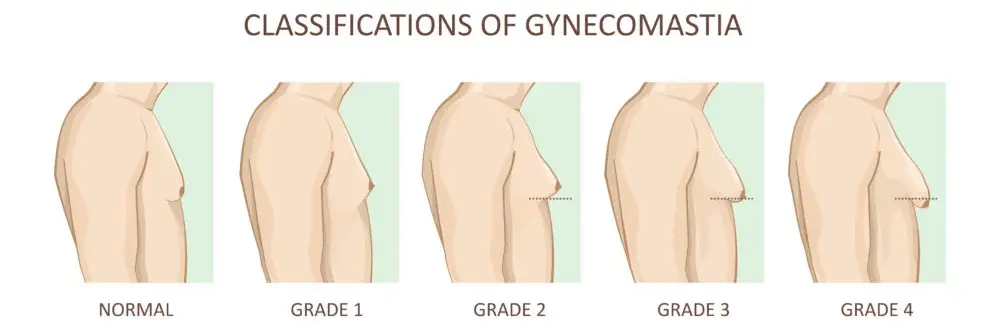
Plastic surgeons classify gynecomastia by severity to help guide surgical planning and treatment. The classification system includes four primary grades:
- Grade I: Minor enlargement with localized tissue under the areola and no excess skin.
- Grade II: Moderate breast enlargement covering the chest area with no skin redundancy or with mild skin excess.
- Grade III: Marked enlargement with noticeable skin ptosis (sagging) and excess tissue.
- Grade IV: Severe enlargement with substantial skin excess and marked female-like breast ptosis.
Treatment recommendations vary depending on the severity of the grade. Milder cases (Grade I and II) are often effectively corrected using liposuction alone or paired with minimal direct excision of glandular tissue. Moderate to severe cases (Grades III, and IV) typically require a combination of glandular excision, targeted liposuction, and skin resection or repositioning techniques to achieve a firm, smooth, and naturally contoured male chest.
Dr. Vallecillos’s Approach to Gynecomastia Surgery
Most of the men I see have tried everything before coming in: losing weight, lifting harder, buying looser shirts. When they learn that glandular tissue doesn’t respond to diet or exercise, there’s often real relief in knowing it was never their fault. My goal is to give each patient a chest that looks like it was always meant to be his. That means removing the right tissue in the right amounts, preserving a natural transition into the surrounding muscle and avoiding the hollow, overcorrected look that gives this surgery away. Seeing the confidence my gynecomastia patients regain is one of the most rewarding parts of what I do.

Can Gynecomastia Be Treated Without Surgery?
In some cases, yes. When gynecomastia is linked to a specific cause, such as a medication or an underlying medical condition, addressing that cause may allow the tissue to shrink. Teenagers with pubertal gynecomastia are usually advised to wait, since many cases resolve on their own as hormones stabilize.
For recent-onset gynecomastia, a physician may prescribe hormone-modulating medications that can reduce breast tissue in some men. These treatments tend to work best within the first several months, before the tissue becomes fibrous. Once gynecomastia has been present for a year or longer, medication rarely reverses it, and surgery becomes the most reliable way to restore a flatter chest. Any medication should be taken only under the guidance of a qualified physician.
Who Is a Good Candidate for Gynecomastia Surgery?
Gynecomastia surgery may be right for you if the following describe your situation:
- You have enlarged breast tissue that makes you self-conscious or causes discomfort.
- Your gynecomastia has persisted despite weight loss, exercise or medical treatment.
- You’re in good overall health and close to a stable weight.
- You don’t smoke or use recreational drugs or anabolic steroids, or you’re willing to stop.
- You have realistic expectations about what surgery can achieve.
Teenage patients can be candidates in certain situations, particularly when gynecomastia causes significant distress. Most surgeons prefer to wait until breast development has stabilized, and younger patients should understand that a second procedure may be needed if tissue returns.
Benefits of Gynecomastia Surgery
A Flatter, More Masculine Chest
By removing excess gland and fat, gynecomastia surgery creates a firmer chest contour that better reflects your physique. With VASER-assisted techniques, Dr. Vallecillos can also refine the borders of the pectoral muscles for added definition.
Freedom in Your Wardrobe and Your Daily Life
Many men describe the simple pleasure of wearing a fitted shirt, taking off their shirt at the beach or hitting the gym without feeling watched. Everyday activities that once caused anxiety can become routine again.
Lasting Confidence
Living with gynecomastia can take a real toll on self-esteem, especially for men who were teased about their chest growing up. Correcting it surgically often brings a meaningful boost in confidence that carries into relationships, work and social life.
Faster Results Than Waiting It Out
Medical management can take months with uncertain results, and long-standing gynecomastia rarely improves on its own. Surgery addresses the tissue directly, and you’ll notice a difference in your chest shape right away.
Which One Is Right for You?
Every gynecomastia procedure is customized to the type and amount of tissue involved. Dr. Vallecillos may use one technique or combine several.
Gynecomastia Surgery Recovery
Gynecomastia surgery is performed on an outpatient basis, so you’ll return home the same day. Your recovery timeline depends on which techniques were used, with gland-only excisions typically healing faster than combined procedures.
The First Two Weeks
Expect swelling, bruising and some tightness across the chest. Discomfort is usually mild to moderate and well controlled with medication. You’ll wear a compression garment around the clock to reduce swelling and help your skin adhere to its new contour. Many men return to desk work within a few days to a week.
Weeks Three to Six
Most bruising fades within the first two weeks, and you’ll begin to see your new chest shape more clearly. Dr. Vallecillos typically recommends wearing your compression garment consistently for about a month. Strenuous exercise and heavy lifting remain off-limits for roughly four weeks, or until you’re cleared.
Months Two to Six
Residual swelling continues to resolve gradually and in some cases takes up to four months to fully settle. Incisions fade over time, and protecting them from the sun for at least six months helps prevent darkening of the skin.
How Long Do Gynecomastia Surgery Results Last?
Glandular tissue that has been removed doesn’t grow back, so results are generally long-lasting. Gynecomastia can return in a small number of cases, usually because of an outside factor rather than the surgery itself. Common culprits include significant weight gain, steroid or marijuana use, certain medications and surgery performed before an adolescent has finished developing. Maintaining a stable weight and avoiding known triggers will help preserve your results.
Gynecomastia Surgery Risks
Gynecomastia surgery is considered a low-risk procedure for healthy men. As with any surgery, potential complications include bleeding, infection, fluid collection, adverse reactions to anesthesia and changes in nipple sensation. Some patients experience slight asymmetry or contour irregularities, and removing too much tissue directly beneath the nipple can create a depression.
Dr. Vallecillos’ experience with combined gland excision and VASER liposuction is designed to reduce these contour issues and create a natural transition across the chest. Following your aftercare instructions, wearing your compression garment as directed and attending your follow-up appointments all support a safe recovery.

How Much Does Gynecomastia Surgery Cost?
The cost of gynecomastia surgery varies based on the complexity of your case and the techniques required. Liposuction alone generally costs less than a combined procedure involving gland excision, liposuction and skin removal. Your total investment will also include surgical facility fees, anesthesia, preoperative testing, compression garments and prescription medications.
Because male breast reduction is usually considered cosmetic, most health insurance plans don’t cover it. Our office offers patient financing to make treatment more accessible, and you’ll receive a detailed, personalized quote after your consultation. When weighing your options, keep in mind that the surgeon’s experience has a lasting impact on your results, which matters far more than finding the lowest price.
Frequently Asked Questions
Can exercise or weight loss get rid of gynecomastia?
Can exercise or weight loss get rid of gynecomastia?
Weight loss can reduce chest fat, which may help men with pseudogynecomastia. True gynecomastia involves glandular tissue that doesn’t respond to diet or exercise, and chest workouts can sometimes make the area look more prominent by pushing the tissue forward.
Is gynecomastia surgery painful?
Is gynecomastia surgery painful?
You won’t feel pain during surgery. Afterward, most men describe the sensation as soreness and tightness similar to an intense chest workout, which typically improves noticeably within the first week.
When can I get back to the gym?
When can I get back to the gym?
Light walking is encouraged right away. Lower-body workouts and light cardio can often resume after about two to three weeks, while chest exercises like push-ups and bench pressing usually wait until about six weeks, once Dr. Vallecillos clears you.
Will I have visible scars after gynecomastia surgery?
Will I have visible scars after gynecomastia surgery?
Liposuction incisions are only a few millimeters long and fade to small marks. Gland excision scars follow the lower edge of the areola, where the natural color change helps camouflage them. More extensive skin removal leaves longer scars, which Dr. Vallecillos places as discreetly as possible.
Can teenagers have gynecomastia surgery?
Can teenagers have gynecomastia surgery?
Teenagers can be candidates when gynecomastia persists or causes significant emotional distress. Because pubertal gynecomastia often resolves on its own, most surgeons recommend waiting at least a year or two after it appears, and a parent or guardian must be involved in the decision.