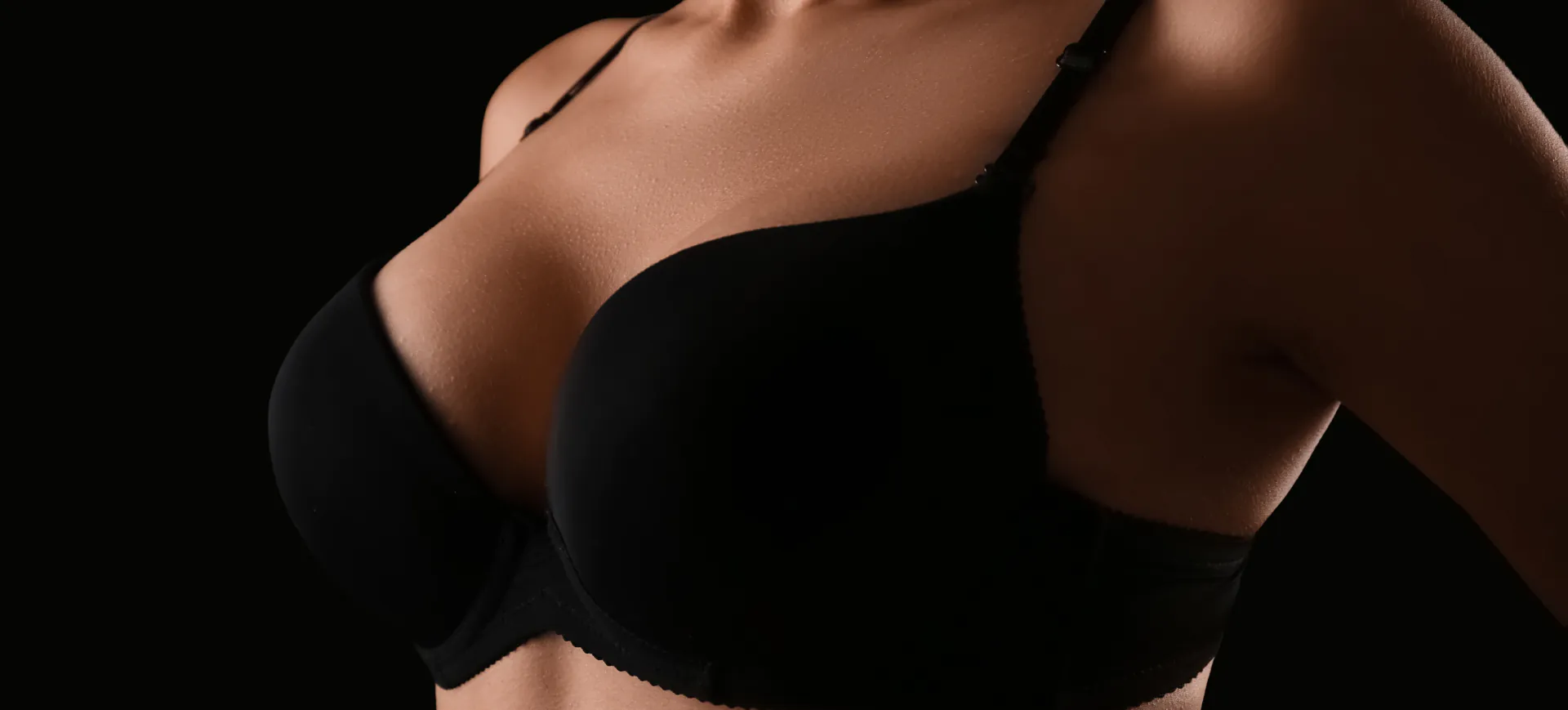
Breast Implant Exchange & Adjustments
Breast implants are not meant to be lifetime devices. Most warranties cover 10 years or less, and many patients find that what felt right at one stage of life no longer fits their goals years later. According to research, implant revision is one of the most commonly requested secondary breast procedures nationwide. There’s nothing unusual or wrong about reconsidering your augmentation, and at the office of Dr. Vallecillos, we are well prepared with a full suite of implant exchange and adjustment procedures to deliver exactly the change you’re looking for.

Your Implant Exchange and Adjustment Options
Saline to Silicone Exchange
Switching from saline to silicone implants is among the most frequently requested adjustments breast augmentation patients ask for. While saline implants are reliable and FDA-approved, they're filled with sterile salt water and tend to feel firmer than silicone. In patients with thinner tissue coverage, saline implants can sometimes cause a rippling or wrinkling effect just under the skin. Silicone gel implants, on the other hand, come much closer to the feel and movement of natural breast tissue.
A saline-to-silicone exchange gives patients the opportunity to adjust the implant’s size and profile in addition to the material itself. During this procedure, Dr. Vallecillos removes the existing implants and replaces them with cohesive silicone gel implants of your preferred size and profile. In many cases, the same incision sites from your original surgery can be reused, minimizing additional scarring. The FDA approves silicone gel implants for patients 22 years of age and older.
Silicone to Saline Exchange
While less common, a silicone-to-saline exchange offers several advantages for patients with certain concerns and preferences. Some prefer saline implants because ruptures are easier to detect with saline. Others look to transition to a new implant material as a way of managing breast implant illness (BII) symptoms they experience with silicone.
Dr. Vallecillos approaches these cases with the same precision and rigor he applies to all revision procedures, carefully evaluating the existing breast pocket, capsule condition and surrounding tissue before developing a plan that prioritizes your safety.
Implant Size or Style Change
For many patients, the size or profile that felt just right a decade or more ago may feel very different now. Adjusting the size or style of your implants is one of the most personal revisions Dr. Vallecillos performs, and the spectrum of options you have available in this area is broader than you may initially think.
Implant sizing adjustment can be done in either direction: upsizing for patients who want greater fullness, and downsizing for those who want a more understated or athletic silhouette. Style changes can be highly impactful, even without a substantial change in size. For example, switching from a round to an anatomical (teardrop) profile, adjusting from a moderate to a high or ultra-high projection, or transitioning from a textured shell to a smooth one can shift the way an implant looks and feels.
Implant and/or Capsule Removal with Fat Grafting
For patients who are ready to move on from implants entirely, explantation combined with fat grafting offers a natural-feeling alternative to a standard removal. Fat grafting uses a patient’s own tissue to restore a soft and proportionate look while avoiding a deflated or hollow result after implant removal.
The condition of the capsule, which is the layer of scar tissue the body forms around an implant, is a key factor Dr. Vallecillos considers when choosing the appropriate capsule removal procedure. A partial capsulectomy removes a portion of the tissue, a total capsulectomy removes it entirely, and an en bloc capsulectomy removes the implant and capsule as a single unit. Fat for grafting is harvested via liposuction from a donor area such as the abdomen, flanks or thighs. The extracted fat is then processed and carefully injected into the breast to sculpt a natural result.
Procedure Walkthrough
While each of these procedures comes with unique safety considerations and potential outcomes, the following requirements apply to all implant exchange and adjustment procedures at the office of Dr. Vallecillos:
Preparation
At least two weeks before surgery, you may be asked to discontinue any blood-thinning supplements, herbs or medications, including aspirin, ibuprofen and vitamin E. Patients who smoke should abstain for a minimum of two weeks before and after surgery. If you are 45 years of age or older, medical clearance from an independent physician will be required prior to your procedure date.
Anesthesia
Most implant exchange and adjustment procedures are performed under general anesthesia. In select cases involving less extensive revision, local anesthesia with IV sedation may be an appropriate alternative. Dr. Vallecillos will determine the right approach for your specific case during the consultation.
The Procedure
Wherever possible, Dr. Vallecillos accesses the breast pocket through existing incision sites to minimize new scarring. Once access is established, the original implant is removed and, depending on the procedure type, replaced with a new device, adjusted for size or style, or left empty to receive the fat graft. When capsulectomy is needed, Dr. Vallecillos manages the capsule as each specific case requires (per the above approaches).
How These Procedures Are Customized to Each Patient
Revision surgeries carry a level of complexity that primary augmentation does not. Scar formation, changes to the geometry of the breast pocket, the current state of the capsule and each patient's existing tissue coverage all factor into how Dr. Vallecillos plans and executes these procedures.
Your input is just as key to the process as your anatomy. Dr. Vallecillos will ask you about feel, profile, lifestyle factors, aesthetic preferences and more to form a highly targeted approach that delivers the results you’re looking for.
For size or style changes, Dr. Vallecillos evaluates the existing breast pocket, skin quality and tissue coverage to predict how new implants will behave once placed. For material exchanges, the condition of the capsule influences the best approach. For removal with fat grafting, Dr. Vallecillos maps both the donor site and the recipient breast tissue to deliver proportionate, symmetric results that harmonize with your natural contours.
Recovery and Aftercare
Recovery timelines vary depending on the approach used and the complexity level of the revision. Standard implant exchanges typically carry a shorter, more manageable recovery than procedures involving capsulectomy or fat grafting, but all patients should plan for several weeks of reduced activity.
During the first week, mild to moderate soreness, swelling and chest tightness are expected and normal. Prescription or over-the-counter pain medications are generally enough to manage discomfort. Most patients working office jobs find they can return to work within two weeks. A supportive surgical bra or compression garment is typically worn for several weeks to promote healing and allow the newly contoured breast to settle.
By weeks three to four, most patients will begin returning to previous activities, but full clearance for exercise and other strenuous activity generally comes between weeks six and eight. Typical aftercare recommendations across these procedures include:
- Sleep positioning with the upper body elevated for at least one to two weeks following surgery
- Incision care per Dr. Vallecillos' specific instructions, including keeping incisions clean and dry and avoiding submerging the chest in water
- Activity restrictions as directed, particularly avoidance of heavy lifting and high-intensity exercise during the acute recovery phase
- Sun protection for incision sites, which may continue to fade and flatten for several months
For fat grafting procedures, some reabsorption of the transferred fat will occur in the weeks following surgery as surviving cells integrate with the tissue. Final results continue to develop as swelling resolves and the transferred tissue establishes itself, often taking between three and six months.

Complementary Procedures
Implant exchange and adjustment procedures are frequently performed alongside other treatments to maximize results.
Breast Lift (Mastopexy)
Downsizing or removing implants can leave loose skin that compromises the final shape, particularly in patients whose tissue has stretched over time. A breast lift repositions and tightens the breast for a more refined, proportionate contour.
BodyTite
Patients undergoing fat harvesting for grafting may benefit from BodyTite at the donor site. This radiofrequency-based platform promotes collagen production and tightens the skin in the treated area, helping to preserve a smooth, taut contour in areas like the abdomen or flanks where fat was removed.
Fraxel Laser
For patients with concerns about scar quality or overall skin texture following revision surgery, Fraxel laser treatments can improve the tone, texture and visibility of incision scars over time, contributing to a cleaner, more polished result at the surface level.
Why Choose Dr. Vallecillos for an Implant Exchange or Adjustment?
Exchanging or adjusting breast implants is often more technically demanding than a first augmentation. Several factors influence the plan: scar tissue, changes to the implant pocket, shifts in skin quality, and potential rupture.
Dr. Vallecillos’s work as a clinical investigator for Mentor and an advisor to Allergan gives him an informed perspective on today’s implant options.
During your consultation, he will review your surgical history and examine your current implants. He will then discuss whether a size change, a different implant type or capsulectomy fits your situation. Contact our office to schedule your evaluation.
Frequently Asked Questions About Breast Implant Exchange
What is breast implant illness, and does switching implant types help?
What is breast implant illness, and does switching implant types help?
Breast implant illness (BII) refers to a wide-ranging set of symptoms, including fatigue, joint pain, brain fog and sleep disturbances, that some patients with breast implants report. BII does not currently have an official medical diagnosis, but awareness among surgeons is growing. Some patients who suspect BII find relief after explantation; others elect to switch materials as part of their response.
Is it safe to upsize significantly in a single revision procedure?
Is it safe to upsize significantly in a single revision procedure?
Moderate upsizing can typically be performed safely within a single procedure. A dramatic volume increase adds a layer of complexity to the revision, as the existing pocket may need to be significantly expanded, and the skin and tissue must be evaluated for their ability to accommodate this change.
Does implant revision leave new scars?
Does implant revision leave new scars?
Dr. Vallecillos makes every effort to access the breast pocket through your existing incision sites, which means revision surgery can often avoid creating additional scarring beyond what you already have. In some cases, such as a capsulectomy, significant pocket modification or a concurrent breast lift, new incisions may be necessary.
Will my results look natural after going from implants to fat grafting?
Will my results look natural after going from implants to fat grafting?
Fat grafting after explantation can produce a genuinely natural-looking outcome, particularly for patients with a moderate amount of donor fat available and realistic expectations about the achievable level of fullness. Because the transferred fat becomes living tissue, it moves and responds like natural breast tissue.
How do I know if I need a capsulectomy during my exchange?
How do I know if I need a capsulectomy during my exchange?
Not every exchange procedure requires capsule removal. If your capsule is still soft and supple enough, it can often remain in place or be gently scored (capsulotomy) to allow for proper implant positioning. A capsulectomy is generally recommended when the capsule has hardened significantly, calcified or is associated with a rupture.
Can I switch from saline to silicone and change my size at the same time?
Can I switch from saline to silicone and change my size at the same time?
In most cases, yes. Combining a material exchange with a size or style adjustment is a common and efficient approach that allows for a more complete revision with a single procedure and recovery period. Dr. Vallecillos will determine your candidacy for a combined approach and outline the plan during your consultation.