
Reconstructive Surgery
Reconstructive surgery holds a distinct and deeply meaningful place within the broader field of plastic surgery. Where cosmetic procedures address personal aesthetic goals, reconstructive surgery can restore form and function to an area after illness, injury or a prior surgery that fell short of expectations. At the Beverly Hills practice of board-certified plastic surgeon Glenn Vallecillos, MD, FACS, this work is approached with the same meticulous surgical precision and patient-centered philosophy that defines every procedure he performs.
Dr. Vallecillos completed his fellowship training in Plastic and Reconstructive Surgery at Providence & St. John's Medical Center in Southfield, Michigan, and has since built a national and international reputation for clinical excellence. He offers three reconstructive procedures: breast reconstruction, nipple reconstruction and reconstructive rhinoplasty. Each addresses specific medical or surgical circumstances, and each demands a high level of technical expertise to execute well.

Reconstructive Surgery Overview
Reconstructive procedures are those that focus on restoring lost or damaged tissue, which has a profound and deeply personal impact on each patient. According to the American Society of Plastic Surgeons, reconstructive procedures account for millions of surgeries performed in the United States each year, with breast reconstruction among the most commonly performed following cancer treatment.
Breast reconstruction rebuilds and reshapes the breast following a mastectomy, whether performed immediately or as a delayed procedure. The approach depends on several factors, including whether radiation therapy is part of the treatment protocol, the patient's overall health and the amount of remaining tissue available for coverage.
Procedure Walk-Through
Preparation
As applicable, you may be advised to discontinue blood-thinning vitamins, supplements and medications for two weeks before surgery. Patients who smoke should stop for at least two weeks before and after the procedure.
Anesthesia
General anesthesia is administered for breast reconstruction.
The Surgery
Dr. Vallecillos offers several reconstructive options tailored to each patient's diagnosis and circumstances. Autologous reconstruction uses the patient's own tissue to rebuild the breast mound. The TRAM flap borrows donor tissue from the abdomen, while the Latissimus Dorsi flap tunnels muscle, fat and skin from the back to the mastectomy site. Alternatively, the DIEP or SGAP techniques transport tissue from the abdomen or buttock without sacrificing muscle.
Nipple reconstruction is often the final chapter of the breast reconstruction process. In most mastectomies, the nipple and areola are removed along with breast tissue, requiring separate reconstruction to complete the restored breast. The procedure can also address cosmetic concerns in non-oncologic patients, including large or elongated nipples and disproportionate areolas.
Procedure Walk-Through
Preparation
The same pre-surgical guidelines apply: discontinue blood thinners for two weeks, stop smoking and arrange for caregiver support during the first week of recovery.
Anesthesia
If nipple reconstruction is performed during or immediately after breast reconstruction, general anesthesia is already in place. As an independent procedure, either general or local anesthesia may be used, depending on the case.
The Surgery
Two main approaches are used. An autologous skin graft uses tissue from the opposite nipple, the upper inner thigh or the abdomen to reconstruct both the nipple and areola. Color match and texture can vary over time, and donor sites carry their own healing considerations. Surgical tattooing offers an alternative to grafting, recreating the visual appearance of the areola with precision and minimal recovery, though touch-up sessions may be needed as pigment fades over the years.
Reconstructive rhinoplasty addresses issues that emerge or continue after a previous nose surgery. Also called revision rhinoplasty, the procedure corrects cosmetic concerns like over-reduction of tissue or misplaced grafts, as well as functional concerns like impaired breathing due to a compromised airway. It is widely considered among the most technically demanding operations in plastic surgery, as the anatomy has already been altered and the available structural material is often more limited.
Procedure Walk-Through
Preparation
As applicable, you may be advised to stop blood-thinning medications and supplements, including aspirin, NSAIDs, Ginkgo biloba and vitamin E, several weeks before surgery. Glasses wearers should arrange to use contact lenses during the healing period, as frames cannot rest on the nose.
Anesthesia
General anesthesia is typically used for reconstructive rhinoplasty. Anesthetic preferences are discussed at the time of consultation.
The Surgery
The procedure typically takes one to two hours. Incisions are placed inside the nose to avoid visible scarring, though a small incision beneath the tip of the nose may be made depending on the corrections needed. Dr. Vallecillos then either grafts supplemental cartilage or tissue to the existing nasal structure or reduces bone and cartilage as indicated. The tissues are redraped over the corrected framework, incisions are closed and a splint is applied to protect the nose during the early healing phases.

Who Is a Candidate for Reconstructive Surgery?
Candidacy varies by procedure, but generally, reconstructive surgery candidates are in good overall health, are not smoking (or are willing to abstain before and after surgery) and have realistic expectations.
For breast and nipple reconstruction, the ideal candidate has undergone or is planning a mastectomy, or has experienced traumatic breast injury. Patients with a history of radiation therapy can still be candidates, though radiation increases the risk of certain complications like capsular contracture around implants.
For reconstructive rhinoplasty, candidates must be at least 12 months out from their previous nasal surgery. The nose continues to change for a full year after rhinoplasty, and operating before that timeline has passed can complicate both the procedure and the outcome. Beyond timing, candidacy depends on nasal anatomy, the nature of the issues to be corrected and the patient's immune health.
A thorough consultation with Dr. Vallecillos is the most reliable way to assess your candidacy and establish a treatment plan aligned with your specific situation.
How Are Reconstructive Surgeries Combined With Other Procedures?
Breast reconstruction is often paired directly with nipple reconstruction, completing the full restoration in a coordinated approach. When autologous tissue grafts require harvesting from the abdomen or thighs, liposuction may be incorporated to refine the donor site and address surrounding contour concerns at the same time.
For patients undergoing reconstructive rhinoplasty who also have concerns about the nasal septum, septoplasty can be incorporated into the same procedure to address deviations causing airway obstruction. Patients interested in broader facial refinement may also explore combining reconstructive rhinoplasty with procedures like blepharoplasty or chin surgery to address the face more comprehensively under a single anesthesia.
Dr. Vallecillos reviews all combination options with patients during consultation, weighing the benefits against safety, timing and recovery considerations.
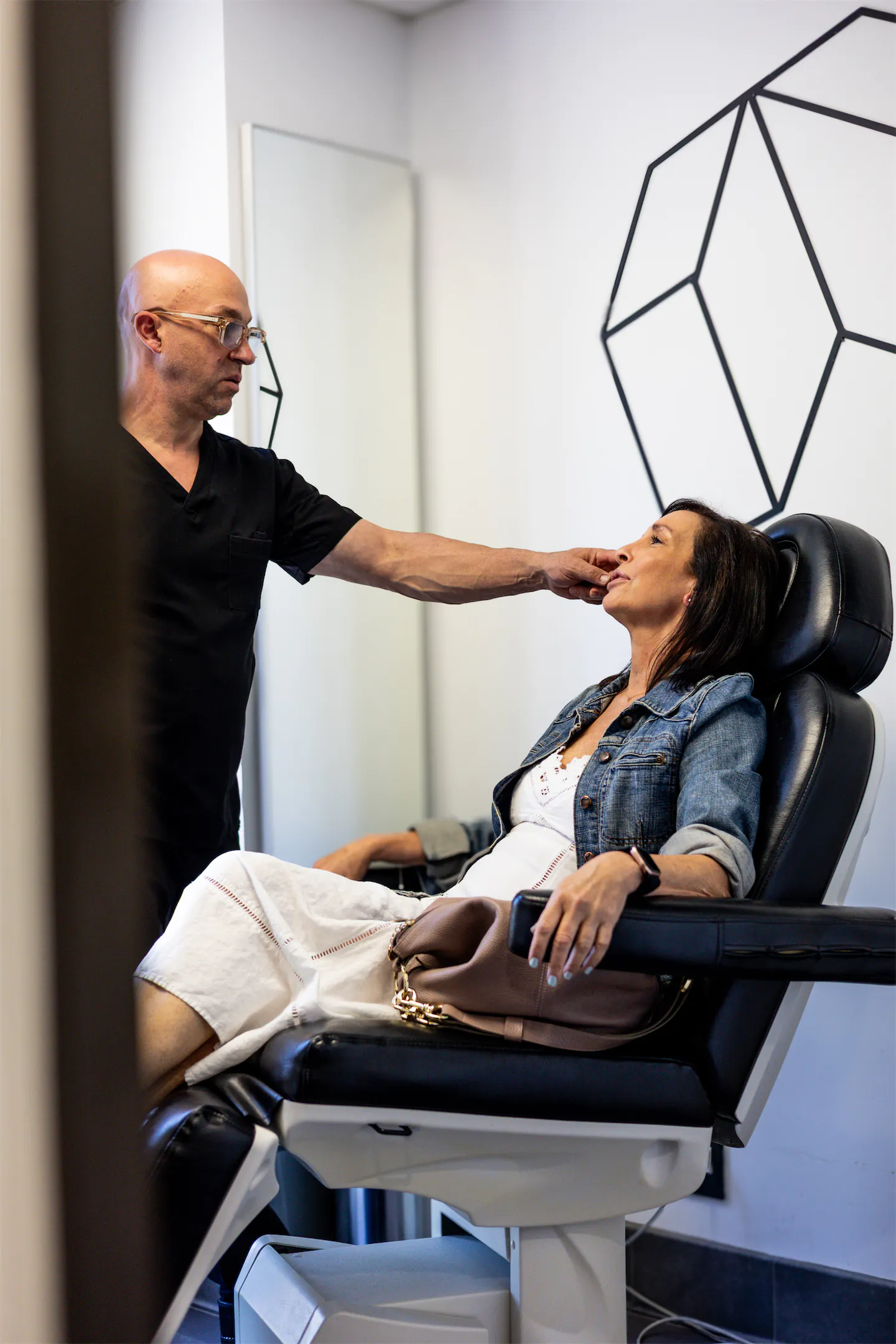
Reconstructive Surgery Recovery, Downtime and Aftercare
Recovery timelines vary depending on the procedure and the scope of the work involved.
Comprehensive aftercare guidance is also available through the Surgical Aftercare page for new patients.
Following breast reconstruction, patients should plan for a caregiver to assist during the first week. Drainage tubes are typically placed to remove excess fluid in the days immediately after surgery. Swelling, bruising and discomfort are expected during the first two weeks. Strenuous activity, heavy lifting and sexual activity should be avoided for four to six weeks.
Nipple reconstruction recovery follows a similar arc if performed as part of a breast reconstruction surgery. As a standalone procedure, it tends to involve a shorter, more localized recovery, though donor site healing (when a tissue graft is used) requires its own attention and care.
After reconstructive rhinoplasty, a splint will be in place for the first week or two. Expect swelling and bruising around the nose and eyes during this initial phase. Most patients are comfortable returning to work or light daily activities within two weeks, though final results take several months to fully settle as residual swelling gradually resolves.

Frequently Asked Questions
Is breast reconstruction covered by insurance?
Is breast reconstruction covered by insurance?
In the United States, the Women's Health and Cancer Rights Act of 1998 requires most health insurance plans that cover mastectomy to also cover breast reconstruction. Coverage specifics vary by plan and provider, so verifying your benefits ahead of scheduling is worthwhile.
How long after a mastectomy can breast reconstruction be performed?
How long after a mastectomy can breast reconstruction be performed?
Breast reconstruction can be performed immediately at the time of mastectomy (immediate reconstruction) or as a delayed procedure months or years later. The best timing depends on whether additional cancer treatments like radiation are needed, as well as the patient's overall health and personal preferences. Dr. Vallecillos will help determine the most appropriate timing during consultation.
How long does it take to see the final results after reconstructive rhinoplasty?
How long does it take to see the final results after reconstructive rhinoplasty?
Final results from reconstructive rhinoplasty typically become visible around six to 12 months after surgery, as swelling continues to resolve gradually throughout the healing period. The general structure of the nose is apparent much earlier, but the finer details of the outcome emerge slowly over time.
Will reconstructive surgery leave visible scars?
Will reconstructive surgery leave visible scars?
All surgical procedures involve incisions and some degree of scarring. Placement of incisions is planned carefully to minimize visibility. Incisions are placed inside the nose for rhinoplasty and in discreet locations for breast procedures. Scar maturation takes time, and following Dr. Vallecillos' aftercare instructions is essential to achieving the best possible long-term result.