

Reduction mammaplasty, commonly known as breast reduction, is a surgical procedure in which tissue, fat, and skin is removed from the breast, decreasing the size of the breast. The procedure may be done to reduce back strain, to improve the proportion of the breast to the rest of the body, or to correct a number of complications from overly large breasts.
According to the American Society of Plastic Surgeons (ASPS), breast reduction surgery consistently ranks among the highest in patient satisfaction in all of plastic surgery, with studies showing satisfaction rates above 95%.
During breast reduction surgery, Dr. Vallecillos will make incisions in the breast, remove the necessary tissue (this process may include the use of liposuction to remove fatty deposits), and reposition the areola and nipple.
Procedure Walk-Through
- Preparation: To prepare for breast reduction, patients are asked to cease the use of all blood-thinning drugs (including aspirin, herbs, vitamins) for two weeks before surgery. If you smoke, you should quit for at least two weeks before and after your operation. If you are over the age of 45, you will need to obtain medical clearance from an independent physician before undergoing surgery. Dr. Vallecillos may also require that you undergo a mammogram before the procedure, as well as after healing is complete. Typically, the breasts are also photographed and measured before and after the operation, to qualify results.
- Anesthesia: You will receive general anesthesia before undergoing breast reduction.
- Depending on your particular circumstances, Dr. Vallecillos may choose one of several options for incision patterns:
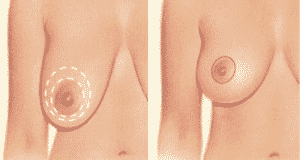
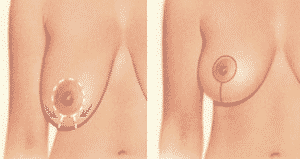
Around the areola and down to the bottom of the breast
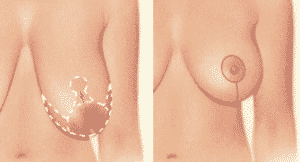
How Breast Reductions Are Customized to Each Patient
Every breast reduction patient presents with a distinct combination of breast volume, skin quality, tissue composition and body proportions, all of which affect the surgical plan Dr. Vallecillos will recommend.
The degree of reduction you’re looking for is also a major factor in how Dr. Vallecillos will approach your procedure. Some patients want to go down two cup sizes to relieve chronic back and shoulder pain, while others have more significant volume concerns that require a more extensive approach. Dr. Vallecillos considers the full picture: your frame, your skin’s elasticity, nipple and areola position and the amount of glandular versus fatty tissue present in the breast.
The location of the incision is also a highly individualized factor when planning a breast reduction procedure. A periareolar incision (around the areola only) may work well for patients needing a less dramatic reduction with minimal ptosis or sagging. The vertical or “lollipop” incision, which circles the areola and extends downward, addresses more significant volume and mild to moderate drooping. For patients requiring the greatest degree of reduction and skin removal, the anchor or inverted-T incision provides the most comprehensive access and reshaping capability.
Finally, the size of the areola is another factor that Dr. Vallecillos addresses during the procedure. Larger areolas are common in patients with large breasts, and resizing them during the reduction creates a more proportionate, natural-looking result. When needed, liposuction may be incorporated to address fatty deposits around the breast tissue for a smoother, more sculpted contour.
Are Breast Reductions Paired With Other Procedures?
Yes, and more commonly than you might think. Because breast reduction surgery already involves repositioning the nipple and areola and resecting excess skin, combining it with complementary procedures can further improve your results without adding significant recovery time.
Breast Lift (Mastopexy) and Breast Reduction
For patients with both significant volume and drooping, a breast lift may be paired with a reduction for more comprehensive results. In many cases, the two procedures overlap significantly; the skin excision and tissue repositioning involved in a reduction already accomplishes much of what a standalone mastopexy would. Dr. Vallecillos will assess the degree of ptosis during your consultation and determine whether a combined approach is warranted or whether the reduction alone will achieve the lift you’re looking for.
Breast Augmentation and Breast Reduction
They may sound contradictory, but in some cases, patients can benefit greatly from combining a breast reduction with an augmentation. For example, patients undergoing breast revision or reconstructive surgery, especially when asymmetry is the primary concern, may opt for an augmentation with their reduction. Dr. Vallecillos may reduce one breast while subtly augmenting the other to achieve a balanced, proportionate result. Learn more about breast augmentation and breast revision.
Nipple Reconstruction
When significant repositioning of the nipple-areola complex is required, nipple reconstruction techniques may be integrated to restore natural symmetry and proportion. Dr. Vallecillos will discuss this possibility if it applies to your case.
Why Choose Dr. Vallecillos for Breast Reduction?
Dr. Glenn Vallecillos is a board-certified plastic surgeon with an international reputation for precision, artistry and patient-centered care. Based in Beverly Hills, Dr. Vallecillos brings a highly refined surgical eye to every procedure. His approach is shaped by years of advanced training and a genuine commitment to achieving results that look natural, not operated on.
After completing his fellowship training in Plastic and Reconstructive Surgery at Providence & St. John’s Medical Center, Dr. Vallecillos went on to become an active national speaker and contributor to publications, including the European Journal of Plastic Surgery. He is a Senior Faculty Member of Palette/Scientiae and has served on advisory boards for Allergan and Suneva, among others.
Dr. Vallecillos understands that the decision to pursue breast reduction is deeply personal. His philosophy, rooted in evidence-based medicine, innovative technique and genuine patient advocacy, means you’ll receive thoughtful, honest guidance from your first consultation through your final follow-up.
Ready for a Change?
Living with the physical and emotional weight of overly large breasts goes beyond aesthetic concerns. When you’re ready to take back your comfort, confidence and freedom of movement, Dr. Vallecillos is here to help. Call (310) 273-3007 or book your consultation online to get started.
Frequently Asked Questions
Who is a candidate for a breast reduction?
You should consider breast reduction if you are a woman whose breasts are fully developed and overly large and cause you chronic pain or discomfort, interfere with your daily activities, and/or are disproportionate to the rest of your body. Causes vary from heredity to weight fluctuations to aging, but no matter the cause, breast reduction surgery can help reduce your breasts and reposition your areola and nipple for smaller, more proportionate breasts.
What is the recovery time for a breast reduction?
After breast reduction surgery, you should expect some pain and discomfort during the first week after surgery. Pain medication and antibiotics may be prescribed to help alleviate discomfort and reduce the risk of infection. Bandages will cover the surgical site and drainage tubes will be inserted under the arms to remove any fluid that accumulates during healing. Breasts may remain swollen and sore for several weeks. Most patients are able to return to work within six weeks after surgery, but scarring will take significantly longer to fade.
Are there risks or side effects with a breast reduction?
Breast reduction surgery is often performed to reduce chronic aches and pains, especially in the shoulders and back. However, surgery does carry its own risks. Risks can include nerve damage, loss of sensitivity in the nipples, unfavorable scarring, and difficulty breastfeeding. Though rare, there is a possibility for asymmetry between the breasts. You should discuss all possible risks and side effects with Dr. Vallecillos prior to undergoing the procedure.
How long do the results last?
Breast reduction surgery will make a permanent change in the size and shape of the breasts. However, aging and loss of skin elasticity may cause later changes in the breast that would need to be addressed with an additional procedure, such as a breast lift.
Does breast reduction surgery affect breastfeeding?
This is one of the most common questions breast reduction patients ask, and the honest answer is that it depends. Breast reduction surgery does carry a risk of affecting milk production and nipple sensitivity, since the procedure involves repositioning the nipple-areola complex and removing breast tissue that may contain milk ducts. Still, many women are able to breastfeed successfully after a reduction. Your ability to breastfeed after a reduction depends on the technique used, the amount of tissue removed and individual anatomy.
Is breast reduction surgery covered by insurance?
In some cases, yes. Unlike most cosmetic procedures, breast reduction may be covered by insurance when large breasts cause documented medical problems, such as chronic back, neck or shoulder pain, skin rashes beneath the breast or difficulty with physical activity. Insurance carriers typically require documentation of conservative treatment attempts (such as physical therapy or prescription pain management) before approving coverage. At the office of Dr. Vallecillos, staff can help guide you through the insurance inquiry process. You can also review general financing information on our financing page.
How do I know what cup size I’ll be after surgery?
While specific cup size targets can be discussed during your consultation, the primary goal of breast reduction surgery is to achieve proportionate, comfortable and natural-looking results relative to your frame. Bra sizing varies significantly by brand and style, so Dr. Vallecillos focuses on volume reduction by weight and overall breast dimensions to guide the planning process. During your consultation, you’ll have the opportunity to discuss the degree of reduction you’re hoping for, and Dr. Vallecillos will advise on what’s realistic given your anatomy.