
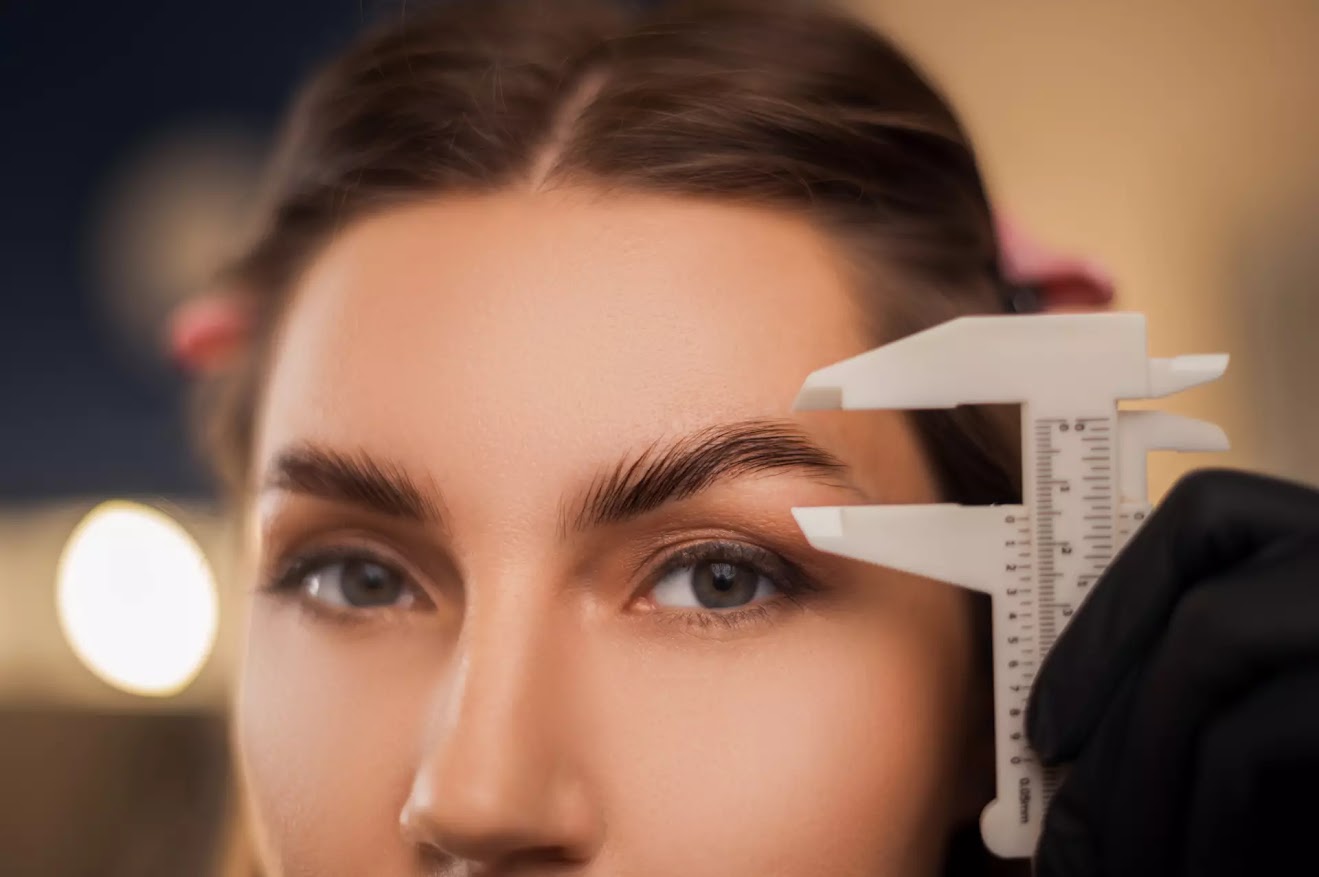
A brow lift, or forehead lift, is a surgery that repositions a low or sagging brow and tightens skin that may be wrinkled or creased across the forehead. A classic or coronal, brow lift involves a surgery in which the surgeon makes a single incision along the hairline and ear area and then manipulates tissue, muscle, and skin to attain a smoother appearance. An endoscopic lift involves smaller incisions in which a scope is inserted and the work is completed using a camera and special instruments.
Procedure Walk-Through
- Preparation: To prepare for a brow lift surgery, you should discontinue the use of blood-thinning vitamins, herbs, and medications for two weeks before the surgery. If you smoke cigarettes, you should quit for at least two weeks before and after surgery. If you are over the age of 45, medical clearance by an independent physician may be required before undergoing surgery.
- Anesthesia: Depending on the individual patient and circumstances, a sedative with a local anesthetic or general anesthesia may be used.
- Dr. Vallecillos may decide to perform either a coronal or endoscopic brow lift. He will discuss beforehand which options are best for you, given the specific diagnosis and circumstances. The procedures are as follows:
Endotine TransBleph
The endoscopic method involves a minimal-access “trans-blepharoplasty incision” brow lift. The access to the brow is gained through incisions in the upper eyelid (the same that would be used for a blepharoplasty). This new technology combines the benefits of a brow lift and an eyelift in one procedure.
Manufactured by Coapt Systems Inc., Endotine TransBleph procedures represent innovation brow lift technology. As depicted in the photograph, Endotine implants are small triangular, “tined” implants that secure soft tissue in place of traditional interior suturing. This minimizes trauma to the surrounding tissue, allows for fast healing, a shortened surgery time, and literally no additional scarring outside of the blepharoplasty scar. Additionally, the tines are bio-absorbable. Hence, as the tissue securely heals into its new re-positioned state, the implant itself gradually and safely reabsorbs into the body over the course of several months, leaving no external visible traces whatsoever.
Coronal Brow Lift
With the coronal brow lift technique, the surgeon will make an incision from ear to ear. The forehead is then lifted and any excess skin is removed. Due to the larger size of the incision, there is often a longer recovery time associated with this method.
What a Brow Lift Can Do for You
A brow lift directly targets the cumulative effects of repeated muscle contractions, sun exposure, gravity and time by repositioning the underlying tissue and skin to restore the brow to a more alert, balanced position.
For many patients, the most meaningful outcome is the way a lifted brow changes how the face communicates. The deep glabellar lines, or the vertical creases between the brows (also called “11 lines”), often create a worried or displeased look. A brow lift softens or eliminates these lines by addressing the tissue and musculature that produce them, working at a level no topical treatment or injectable can reach on its own.
In more advanced cases of brow descent, the resulting hooding of the eyelid can impair your peripheral vision. Correcting the brow position in those situations is as practical as it is aesthetic. When paired with procedures like blepharoplasty or a facelift, a brow lift amplifies results across the upper and mid-face, creating a comprehensive improvement that accounts for the overall harmony of the face.
Am I a Good Candidate for a Brow Lift?
Candidacy for a brow lift is broader than most people expect. While the majority of patients seeking this procedure are between 40 and 60 years old, healthy adults at virtually any age can qualify, depending on their specific concerns and goals.
Younger patients, particularly those in their 30s, can benefit significantly from a brow lift when early-onset glabellar creases, deep horizontal forehead lines or a naturally heavy brow take hold. Genetic factors can contribute to a heavy or descended brow in many younger patients, and surgery can correct the perception of fatigue or disapproval that often comes with it.
For patients over 40, the case for a brow lift is even easier to make. Age-related skin laxity causes the brow to descend over time, and the forehead lines that once disappeared between expressions become permanently etched. Brow lift surgery addresses this at the source. According to the American Society of Plastic Surgeons, forehead lifts saw 2% year-over-year growth in 2023 and continued growing in 2024, reflecting steady demand across a widening range of patient demographics.
General factors that support a strong candidacy include:
- Good overall health, with no active skin infections or poorly controlled chronic conditions
- Realistic expectations about what brow lift surgery can and cannot achieve
- A commitment to stopping smoking for at least two weeks before and after surgery
During your consultation, Dr. Vallecillos will assess your brow position, skin laxity, hairline and the distribution of your forehead lines to determine which surgical approach aligns best with your anatomy and goals. Ideal candidates are not defined by age alone. They are defined by clear goals, sound overall health and an interest in results that look genuinely, effortlessly refreshed.
How Brow Lifts Are Customized to Each Patient
No two brow lifts are identical, nor should they be. Between the coronal, endoscopic and Endotine TransBleph techniques outlined above, Dr. Vallecillos selects and refines an approach based on a detailed assessment of each patient’s anatomy, hairline, skin quality and aesthetic goals.
Hairline position is one of the most significant factors in determining which surgical approach Dr. Vallecillos will use. Patients with higher hairlines benefit from an endoscopic or pretrichial approach that lifts the brow without raising the hairline further. Those with average or lower hairlines are often strong candidates for the coronal approach.
Facial symmetry is another area requiring a discerning eye. The two sides of the face are rarely perfectly balanced, and skilled plastic surgeons account for these natural asymmetries rather than treating the brows as a single uniform structure. Dr. Vallecillos evaluates how brow position interacts with the orbital rim, the eyelids and the upper third of the face as a whole, taking into account how the face moves dynamically with expression.
Brow Lift Recovery and Aftercare
Brow lift recovery follows a predictable and well-tolerated window. For most patients, the acute phase lasts about one to two weeks, with swelling, bruising and forehead tightness peaking within the first 48 to 72 hours before resolving steadily from there.
The First Week
During the first week, keeping your head elevated when resting is recommended to reduce swelling. Cold compresses applied as directed can ease discomfort, and strenuous physical activity should be avoided entirely during this period. Some temporary numbness or tingling in the forehead is normal (and short-lived) as the nerves adapt.
Weeks 2 Through 4
By the second week, visible bruising typically subsides significantly, and sutures are usually removed. Most patients feel comfortable resuming light daily activities and returning to social settings around this time. Those who underwent the coronal brow lift may experience a slightly longer recovery window due to the extent of the incision, though the results tend to be the most comprehensive of all available techniques.
One Month and Beyond
Over the following months, the repositioned tissue settles into its final state, and results continue to refine. For patients who choose the Endotine TransBleph technique, the bio-absorbable tines gradually resorb into the body naturally over several months, leaving no external trace. Final results are typically fully visible by months three to six.
Dr. Vallecillos will provide you with a personalized aftercare plan following your procedure. For patients combining a brow lift with additional facial work, such as blepharoplasty or AccuTite, recovery instructions will be tailored to account for each procedure performed.
Ready for Brow Lift Results You’ll Love?
Well beyond pure aesthetics, a brow lift gives you the ability to better reflect how you feel to the outside world. Under the care of Dr. Vallecillos, the procedure delivers results that are subtle, visible and lasting.
To schedule a consultation at Dr. Vallecillos’ Beverly Hills office, contact us at (310) 273-3007 or request an appointment online.
Frequently Asked Questions
What does a brow lift do?
Brow lift surgery addresses signs of aging on the forehead and brow area of the face. Using carefully hidden incisions and sutures, the skin is repositioned and tightened to reduce the appearance of lines and wrinkles. Droopy brows and deep creases are immediately smoothed and lifted.
What is the difference between Forehead vs Brow Lift Surgery?
While these terms are often used interchangeably, the client’s goals will determine the proper procedural name. Brow lifts focus on tightening and lifting the eyebrow area. In contrast, a forehead lift focuses on eliminating wrinkles and deep creases on the forehead.
Is a brow lift painful?
Brow lift procedures are performed using a local anesthetic, making the surgical experience pain-free. Tenderness, discomfort, and bruising are common after a procedure. Your provider will help manage your post-operative pain with prescription pain medications.
Will I have visible scars from a brow lift?
Skilled plastic surgeons conceal brow lift incisions at the hairline, in the hair, or in a naturally occurring crease. Because of the location of the incisions, brow lifts leave clients with no visible signs of scarring. Those with sparse or thinning hair may have minimal visible scarring.
How much does it cost to lift your eyebrows?
The American Society of Plastic Surgeons reports that an eyebrow or brow lift costs $3,900. This national average does not take into consideration the type of incision chosen or additional costs like anesthesia, facility fees, testing, or medications.
What is the best brow lift procedure?
Coronal brow lifts are the most comprehensive and widely used procedure. Other brow lift techniques (endoscopic, hairline, endo-coronal) deliver results that may be a better fit for certain clients. Discuss your goals during your surgical consultation to determine your options.
What age should you get a brow lift?
Most brow lift patients are between 40 and 60 years old. Any healthy adult can benefit from a brow lift’s dramatic and lasting effects, including younger patients with heavy or drooping brows and those with early-onset worry lines or deep wrinkles.
Who is a good candidate for brow lift surgery?
Healthy adults of any age can be good candidates for brow lift surgery. People over 40 are good candidates for anti-aging brow lift procedures. Younger adults with drooping brows or early onset worry lines and deep wrinkles will also benefit significantly from brow lift procedures.
What are the risks associated with brow lifts?
While brow lift procedures are safe, all surgical procedures carry risks of rare complications. Post-procedure changes in skin sensation, numbness, scarring, facial asymmetry, and changes to the hair have rarely been reported. Reactions to anesthesia or other treatments are possible but rare.
Can a brow lift be combined with other procedures?
Brow lifts are often performed alongside other procedures to create a more comprehensive anti-aging approach to your cosmetic enhancements. Clients who undergo additional procedures simultaneously often choose eyelid, forehead, or facelift rejuvenation to accompany their brow lift.